Anthropic Takes Claude Into Classrooms: 2026 Explained
Anthropic is pushing Claude deeper into classrooms, and this time it's courting teachers, not just students. Here's what the news means for you.
📰 What Just Happened?
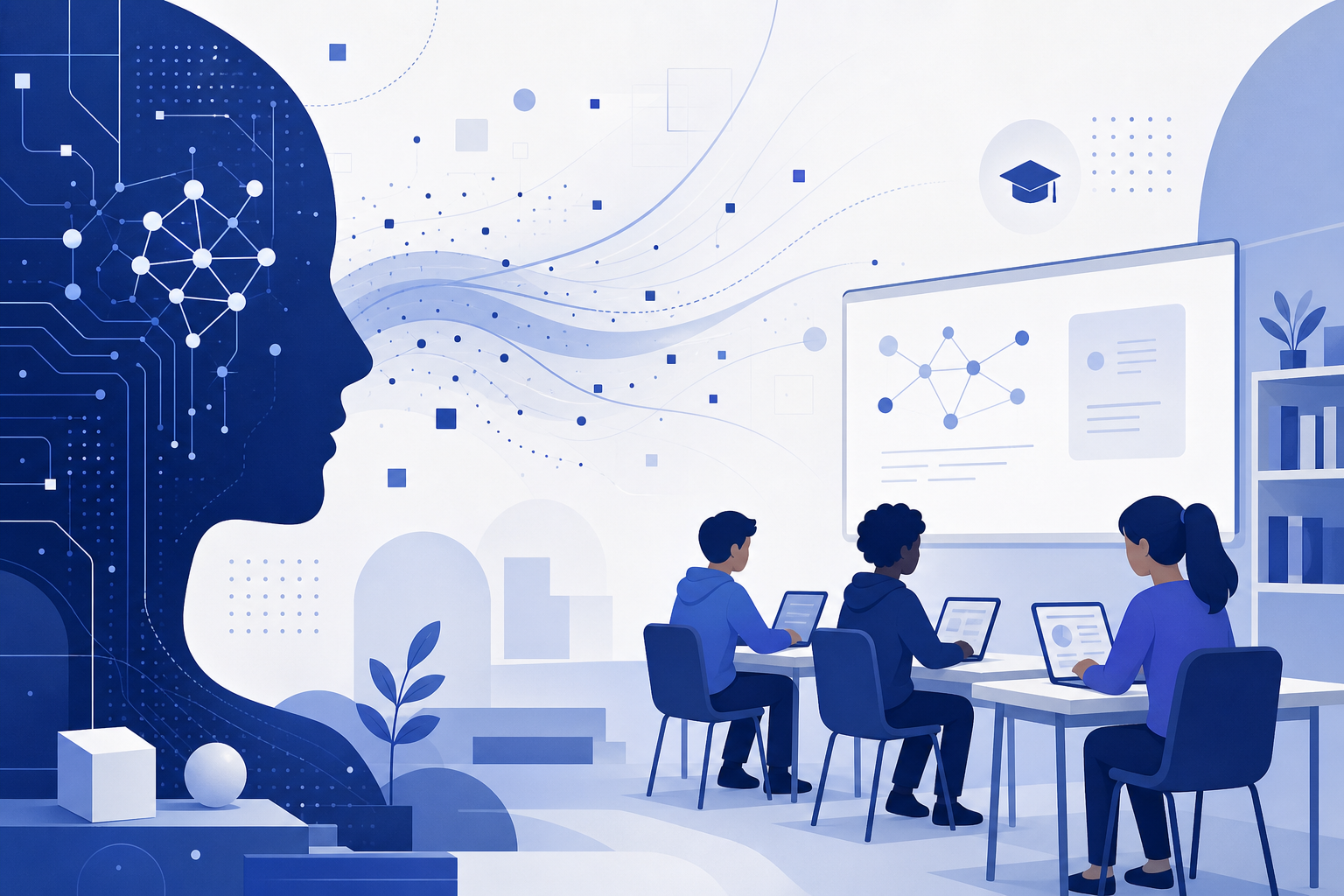
Benzinga reports that Anthropic is taking Claude into classrooms, framing it as the AI education race expanding 'beyond students.' In plain terms: Anthropic isn't just trying to get students to use Claude for homework, it's building tools and partnerships aimed at teachers, professors, and entire institutions.
This builds on Claude for Education, the program Anthropic launched in April 2025. Its signature feature is Learning Mode, which deliberately does NOT hand over answers. Instead, it asks Socratic-style questions ('What do you think the first step is?') to guide users toward understanding. Early university partners included Northeastern University, the London School of Economics, and Champlain College, with integrations into Canvas (the learning management system used by thousands of schools).
Anthropic has also joined teacher-focused efforts, including the National Academy for AI Instruction alongside the American Federation of Teachers, a signal that the 'beyond students' angle means winning over the people who run classrooms, not just the people sitting in them.
What 'beyond students' actually means
Students were the first wave of AI adoption in education, often unofficially. The next wave is institutional: teachers using AI to build lesson plans and rubrics, administrators rolling out campus-wide licenses, and AI companies competing for those contracts. That's the race this headline describes.
🏫 Why the Big AI Labs All Want the Classroom
Every major AI lab is fighting for education. OpenAI offers ChatGPT Edu and added a Study Mode in 2025 that works much like Claude's Learning Mode. Google has pushed Gemini into schools aggressively, including free access offers for college students. Anthropic's classroom push is its answer to both.
Why does everyone want students and teachers? Habit formation. The AI tool you use through four years of college is likely the one you'll bring into your first job, or your first business. Education is customer acquisition with a decade-long payoff.
There's also a trust angle. Schools worry AI makes students stop thinking. Anthropic's bet is that a 'tutor, not answer machine' design, Learning Mode's guided questioning, is the version of AI that institutions will actually approve and pay for.
💼 Why This Matters for Solopreneurs and Knowledge Workers
You're probably not enrolling in a university this fall, so why care? Three reasons.
First, Learning Mode isn't locked inside universities. Claude offers learning-style behavior to regular users too, and it changes how you can use AI: instead of outsourcing your thinking, you can use Claude (currently powered by models like Claude Sonnet 4.6) as a personal tutor for skills you're trying to build, SQL, copywriting, bookkeeping, a new language.
Second, this is a market signal. When Anthropic, OpenAI, and Google all pour resources into teachers, an ecosystem forms around them: courses, templates, consulting, content. If you create content or tools for educators, or teach anything online, AI-assisted teaching is a growing niche you can serve today.
Third, it previews where workplace AI is heading. The 'guide, don't just answer' design pattern showing up in classrooms is the same pattern appearing in corporate training and onboarding. Understanding it now keeps you ahead of clients and employers who will ask about it later.
⚖️ Claude vs ChatGPT vs Gemini in Education
Here's how the three big players' education offerings compare at a glance. All three now share the same core idea, a mode that tutors rather than answers, but they differ in emphasis and distribution.
| Anthropic (Claude) | OpenAI (ChatGPT) | Google (Gemini) | |
|---|---|---|---|
| Education product | Claude for Education | ChatGPT Edu | Gemini for Education |
| Tutor-style mode | Learning Mode (Socratic questioning) | Study Mode | Guided learning features |
| Notable distribution | University partners, Canvas LMS integration | Campus-wide Edu licenses | Bundled with Google Workspace for Education |
| Teacher-facing angle | Teacher training via National Academy for AI Instruction | Also a National Academy partner | Teacher tools inside Google Classroom |
| Free way to try it | claude.ai free tier | chatgpt.com free tier | Gemini free tier / student offers |
🚀 How to Try It Yourself Today
You don't need a .edu email to experience what Anthropic is selling to schools. Here's the fastest path, whether you're a curious individual, a self-directed learner, or an educator.
If you teach, a course, a workshop, even a YouTube tutorial series, try asking Claude to act as a teaching assistant: draft a lesson outline, generate practice questions at three difficulty levels, or write a rubric. That's essentially the workflow Anthropic is pitching to professors.
- ✔Go to claude.ai and sign up for the free tier (no .edu email needed)
- ✔Ask Claude to tutor you instead of answering: 'Teach me X step by step, quiz me as we go, don't give me the answers'
- ✔Pick one real skill gap in your business (spreadsheets, pricing, a coding basic) and run a 20-minute tutoring session
- ✔If you're an educator, check anthropic.com/education for the Claude for Education program details
- ✔Compare the experience with ChatGPT's Study Mode to see which teaching style fits you
🔭 What to Watch Next
The education race is a leading indicator for the broader AI race, so a few things are worth tracking through 2026.
Watch whether classroom deals turn into default tools: LMS integrations like Canvas matter more than press releases, because they decide which AI sits one click away from millions of students. Watch teacher sentiment, training programs like the National Academy for AI Instruction will shape whether AI is welcomed or banned in K-12. And watch for these 'learning-first' AI designs to migrate into workplace products, because whatever wins the classroom tends to show up in your office software a year or two later.
Bottom line: Anthropic's classroom push isn't just an education story. It's a preview of how AI companies want you to use their tools, as a coach that makes you sharper, not a vending machine for answers.
❓ Frequently Asked Questions
What is Claude for Education?
It's Anthropic's program for schools and universities, launched in April 2025. It gives institutions campus-wide access to Claude plus Learning Mode, a setting where Claude guides students with questions instead of giving direct answers. Early partners included Northeastern University, the London School of Economics, and Champlain College.
Is Claude's Learning Mode free, and can I use it without being a student?
You can use Claude for free at claude.ai, and you don't need a school account to get tutor-style behavior, you can select a learning style or simply prompt Claude to teach step by step and quiz you rather than answer outright. Full Claude for Education features are provided through participating institutions.
How is Claude for Education different from ChatGPT Edu?
They're direct competitors. Both offer institution-wide access and a tutoring mode (Claude's Learning Mode vs ChatGPT's Study Mode). Anthropic leans on its safety-focused reputation and LMS integrations like Canvas, while OpenAI leans on ChatGPT's larger user base. For an individual learner, the practical experience is similar, try both free tiers and compare.
Does this news change anything for regular Claude users?
Not immediately, your claude.ai experience stays the same. But it signals where Anthropic is investing: guided-learning features, institutional tools, and integrations. Features built for classrooms (like better step-by-step teaching) tend to reach consumer and business plans over time.
🏁 Final Thoughts
The headline is about classrooms, but the story is about the future default AI for millions of people. Anthropic is betting that a Claude that teaches, not just answers, is what schools will adopt and what students will carry into their careers. You can test that bet yourself in the next ten minutes: open claude.ai, ask it to tutor you on one skill your business needs, and see if guided learning beats copy-paste answers. If this explainer saved you a research rabbit hole, subscribe to Agents at Work for plain-English AI news breakdowns, and drop a comment: would you want AI to give you the answer, or make you work for it?
Last updated: July 15, 2026 · Keyword: Claude for Education · Agents at Work


Comments
Post a Comment