Anthropic's Claude Science App Lands in Kendall Square (2026)
Anthropic is bringing its Claude Science app to Kendall Square, Cambridge — the world's densest biotech cluster, according to The Boston Globe. Confused by what that headline actually means? Here's the plain-English breakdown: what happened, why it matters, and how you can try Claude's science tools today.
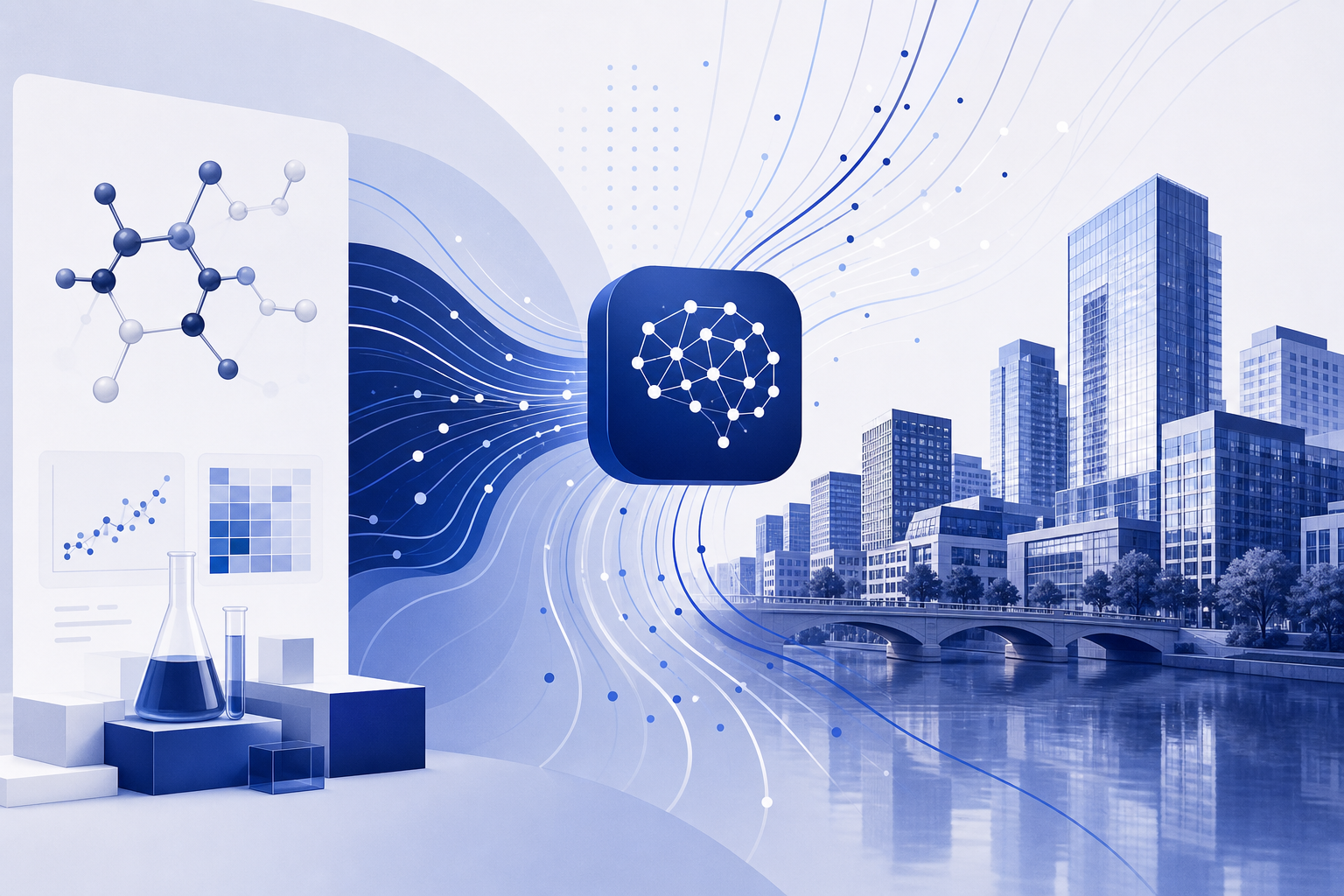
📰 What Happened: Claude's Science Push Arrives in Boston's Biotech Capital
The Boston Globe reported that Anthropic — the AI company behind Claude — is bringing its Claude Science effort to Kendall Square in Cambridge, Massachusetts. Not from the Boston area? Here's why that location matters: Kendall Square, the neighborhood surrounding MIT, is often called 'the most innovative square mile on the planet,' and it's home to Moderna, Biogen, the Broad Institute, and the research outposts of nearly every major pharmaceutical company.
Anthropic isn't just opening another tech office. They're placing a science-focused product inside the densest concentration of biotech and life-sciences talent anywhere on earth — and that tells you something about who they want using Claude next: not just coders and marketers, but bench scientists, lab managers, and drug-discovery teams.
This builds on something Anthropic announced in October 2025: 'Claude for Life Sciences,' a package that wired Claude into research tools like Benchling (a lab data platform), PubMed (the biomedical research database), and 10x Genomics, and added purpose-built skills for tasks like following scientific protocols. The Kendall Square move is the physical extension of that strategy — put the product where the scientists actually work.
Why Kendall Square specifically?
Proximity is strategy. Life-sciences companies are cautious buyers — regulated data, expensive experiments, long sales cycles. Selling AI to them works better face-to-face, inside their world, than through a website. By being in Kendall Square, Anthropic can build alongside the exact customers it's targeting: MIT labs, biotech startups, and pharma giants, all within walking distance of each other.
🎯 Why It Matters Even If You're Not a Scientist
You might be thinking: 'I run a newsletter / a consulting business / a small online shop. Why should I care about an AI lab tool in Cambridge?' Three reasons.
First, this fits a bigger pattern: AI companies are moving from general-purpose chatbots to specialized, industry-specific apps. Anthropic has already done this with Claude Code for developers and Claude in Excel for financial analysts. Claude Science is the same playbook applied to research. The one-size-fits-all chatbot era is giving way to tools built for specific professions — and eventually, one of them will be built for whatever you do.
Second, features built for scientists tend to trickle down to everyone else. Deep literature search, careful source citation, structured protocol-following, connections to external databases — these were built because researchers demanded rigor. Those same capabilities make Claude better at the research tasks solopreneurs do daily: competitive analysis, fact-checking a report, synthesizing 40 browser tabs into one answer.
Third, it tells you where the money is moving. If you're a freelancer or consultant serving biotech, healthcare, or research clients, an Anthropic outpost in Kendall Square signals faster AI adoption across those accounts. Get ahead of that curve. Knowing which tools your clients are picking up — and being the person who can actually run them — is a real edge in 2026.
🔬 Claude Science vs. Regular Claude: What's Actually Different?
Based on what Anthropic has publicly shared since launching Claude for Life Sciences in October 2025, the science-focused offering isn't a different model — it runs on the same frontier lineup (currently Claude Opus 4.8 and Claude Sonnet 4.6). What changes is everything around the model: the connectors, the skills, and the guardrails.
Think of it like hiring two equally smart people — except one already has logins to all your internal systems and has read your standard operating procedures. Same intelligence. Dramatically more useful on day one.
Here's a simplified comparison of how the science offering differs from the everyday Claude app most of us use:
| Feature | Regular Claude app | Claude for Science / Life Sciences |
|---|---|---|
| Underlying model | Claude Opus 4.8 / Sonnet 4.6 | Same frontier Claude models |
| Data connections | General web, your files, common work apps | Research tools like Benchling, PubMed, 10x Genomics |
| Built-in skills | Writing, coding, analysis | Scientific protocols, literature review workflows |
| Target user | Anyone | Researchers, labs, biotech and pharma teams |
| How you get it | claude.ai — free and paid tiers | Aimed at organizations; ask Anthropic's sales team |
🏁 The Bigger Story: AI Companies Are Racing to Own Science
Anthropic isn't alone here, and the competition matters. OpenAI has been pitching researchers on its o-series reasoning models and ChatGPT's deep research features. Google DeepMind built AlphaFold — a protein-structure model that earned it Nobel Prize-adjacent credibility — and keeps pushing Gemini into scientific workflows. Every major AI lab has planted a flag in science.
Why the obsession? Two reasons. Commercially, pharma and biotech have enormous budgets and real bottlenecks — one failed drug trial can cost hundreds of millions of dollars, making research-speed tools easy to justify. Reputationally, 'AI that helps cure diseases' is the strongest counter to public skepticism about the technology. And Anthropic's CEO Dario Amodei laid out the ambition in his 2024 essay 'Machines of Loving Grace': AI compressing decades of biological progress into years.
A physical office in Kendall Square is how that ambition gets tested. It's much easier to build tools scientists actually use when your product team can walk to a wet lab and watch how the work happens.
What this means for the Boston tech scene
For Boston and Cambridge, this adds another anchor to a local AI scene that has sometimes felt overshadowed by San Francisco. More local hiring, more biotech-AI startup activity, more events where the two communities overlap. If you're a job seeker or founder in the region, pay attention.
🛠️ How You Can Act on This Today
You don't need a lab coat or a Kendall Square badge to benefit from this news. Here's what different readers can do right now.
If you're curious: read the original Boston Globe piece for the local details, then skim Anthropic's 'Claude for Life Sciences' announcement on anthropic.com/news to see exactly which research tools Claude connects to. Together they give you the full picture in about ten minutes.
If you're a knowledge worker or solopreneur: try Claude's research capabilities on your own work. The free tier at claude.ai is enough to test it — ask Claude to research a market, compare sources, and cite where each claim came from. If you like it, the paid Pro plan unlocks longer sessions and connectors to tools you already use, like Google Drive.
If you work in or around life sciences: this is your cue to get ahead of the adoption curve. Anthropic's life-sciences offering is aimed at organizations, so the path is through their sales/contact page — but as an individual you can already use Claude to summarize papers from PubMed, draft protocols, or clean up analysis code.
- ✔Read the Boston Globe article for the Kendall Square specifics
- ✔Skim Anthropic's Claude for Life Sciences announcement (anthropic.com/news, October 2025)
- ✔Test Claude's research skills free at claude.ai with a real question from your work
- ✔If you serve biotech/health clients, note which AI tools they're adopting — it's billable knowledge
- ✔Boston-area readers: watch local AI + biotech meetups for Anthropic events and hiring
❓ What We Still Don't Know
A quick honesty check, because news explainers should separate confirmed facts from speculation. The headline tells us Anthropic's Claude Science effort is 'coming for Kendall Square,' but details like exact office location, headcount, opening timeline, and any new product features beyond the existing Life Sciences offering are in the Globe's reporting — and some may not be public at all yet.
What Anthropic has confirmed: Claude for Life Sciences launched in October 2025, it connects to major research platforms, and the company has been expanding aggressively across industries and geographies through 2025 and into 2026.
What to watch next: whether Anthropic ships a distinct 'Claude Science' consumer-facing app (the way Claude Code became its own product), which Boston institutions announce partnerships, and whether pricing for individual researchers — not just enterprises — gets announced. We'll cover those developments here as they're confirmed.
❓ Frequently Asked Questions
What is the Claude Science app?
It's Anthropic's science-focused version of Claude, built on the 'Claude for Life Sciences' offering that launched in October 2025. The underlying models are the same — Claude Opus 4.8 and Sonnet 4.6 — but it adds connections to research platforms like Benchling, PubMed, and 10x Genomics, plus skills for scientific workflows like following lab protocols and running literature reviews.
Can I use Claude for Science as an individual, or is it enterprise-only?
The life-sciences package is aimed at organizations and typically goes through Anthropic's sales team. That said, individuals can already do real research work with the regular Claude app at claude.ai — summarizing papers, analyzing data, searching the web with citations — on the free or Pro tiers.
Why is Anthropic going to Kendall Square instead of staying in San Francisco?
Kendall Square is the world's densest biotech cluster — home to MIT, the Broad Institute, Moderna, Biogen, and most major pharma research labs. Put your team there and your product people can walk to thousands of potential users and partners. That makes both development and sales dramatically easier, and it signals that Anthropic sees life sciences as a core market, not a side project.
Is Claude Science a new AI model?
No — based on Anthropic's public announcements, it's not a separate model. It's the existing frontier Claude models wrapped with science-specific integrations, skills, and workflows. The intelligence is the same; the packaging is what's specialized for research.
🏁 Final Thoughts
Anthropic is moving its science-focused Claude offering to the doorstep of the world's biggest biotech cluster. The Boston Globe headline is really a story about AI's next phase: specialized, profession-specific tools replacing one-size-fits-all chatbots. Even if you never touch a pipette, the research rigor built for scientists is already improving the Claude you use at claude.ai for everyday work. Want more explainers like this? Subscribe to Agents at Work, and drop a comment telling us which AI headline confused you this week — we'll cover it next.
Last updated: July 14, 2026 · Keyword: Claude Science app · Agents at Work


Comments
Post a Comment