Claude Code 2.1.216 Permission Handoff News Explained (2026)
Claude Code 2.1.216 is testing whether agent permissions survive the handoff between AI agents, according to techi.com. Here is what that headline means, why it matters for anyone using AI assistants, and what you can do about it today.
📰 What Happened: Claude Code 2.1.216 Puts Permission Handoffs Under the Microscope
On July 21, 2026, tech outlet techi.com reported on Claude Code version 2.1.216, an update to Anthropic's AI coding agent. The report frames the release around one question: when Claude Code hands a task off to a helper agent, do the permission rules you set for the main agent actually carry over to the helper?
Quick background for non-developers. Claude Code is a tool that lets Claude, Anthropic's AI model family that now includes Claude Sonnet 4.6 and Claude Opus 4.8, work directly on your computer. It can read files, edit code, and run commands. Because that is real power over a real machine, Claude Code has a permission system. You decide what the AI can do automatically and what requires your explicit approval.
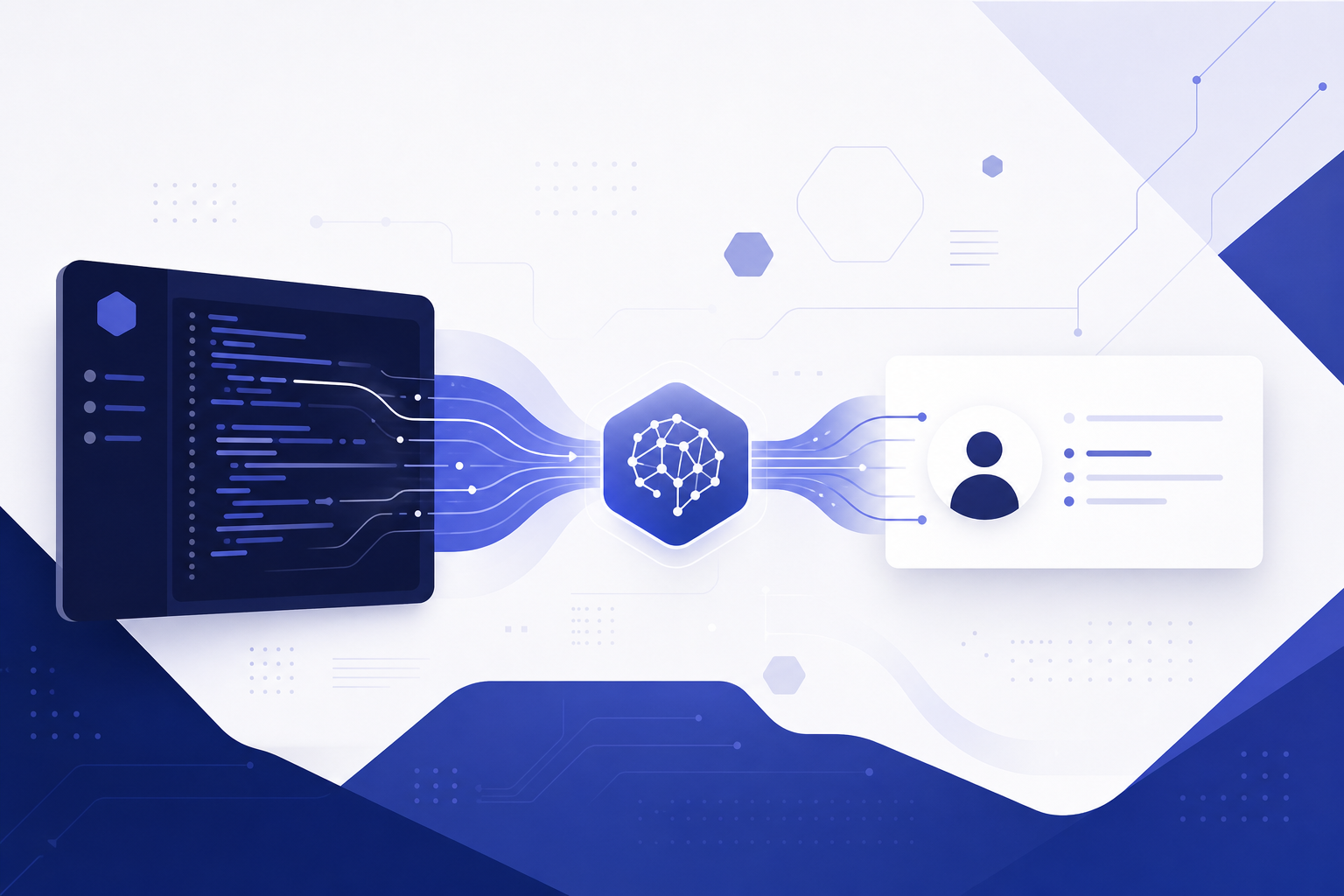
Modern versions of Claude Code can also spawn subagents. Think of the main agent as a project manager who delegates chunks of work to specialist assistants. The moment of delegation is the handoff. The question the 2.1.216 release raises, per the techi.com headline, is whether your carefully chosen rules follow the work when it moves from the manager to the assistant, or whether the assistant starts with a different rulebook.
Why version numbers like 2.1.216 matter
Claude Code ships small updates constantly, often several per week. Most are invisible fixes. A release becomes newsworthy when it touches security or permissions, because those changes affect what an AI can do on your machine without asking. That is why a patch-level version like 2.1.216 earned its own headline.
🤝 The Handoff Problem in Plain English
Imagine you hire a contractor to renovate your kitchen. You give them a house key and one rule: never enter the home office. The contractor then brings in a plumber, an electrician, and a painter. Does your home office rule automatically apply to all three? Or does each new worker arrive with no idea the rule exists?
That is the permission handoff problem. In AI agent systems, the main agent receives your rules: which folders it can touch, which commands it can run, which actions need your approval. When it delegates to a subagent, that subagent is technically a new worker. If the rules do not transfer cleanly, you get one of two bad outcomes. Either the subagent is too restricted and keeps interrupting you with approval requests for things you already allowed, or it is too permissive and does things you explicitly blocked.
The second outcome is the scary one. Security researchers have flagged permission inheritance as a weak point across the whole agentic AI industry, not just at Anthropic. Any system where one AI can create another AI worker has to answer this question. The table below shows the two failure modes and the ideal behavior.
| Scenario | What the subagent does | Result for you |
|---|---|---|
| Rules transfer too weakly | Ignores restrictions you set on the main agent | Security risk: blocked actions may run anyway |
| Rules transfer too strictly | Loses approvals you already granted | Annoyance: constant re-approval prompts, slower work |
| Ideal handoff | Inherits your exact ruleset, no more, no less | Safe and smooth: set rules once, they hold everywhere |
💼 Why This Matters Even If You Never Write Code
You might think a coding tool update is developer news only. It is not, for three reasons.
First, AI agents are moving into everyday work. The same architecture behind Claude Code, a main agent delegating to helpers with scoped permissions, is the blueprint for AI assistants that manage email, calendars, bookkeeping, and customer support. If you are a solopreneur planning to hand real business tasks to an AI in 2026, the reliability of permission handoffs decides whether that is safe. An agent that pays invoices should not be able to quietly delegate to a helper that lacks your spending limits.
Second, this is how trust in AI gets built or broken. Anthropic publicly testing whether permissions survive handoffs is a sign the industry knows delegation is a risk surface. When you evaluate any AI tool that acts on your behalf, the question to ask vendors is now clear: if your agent delegates work, do my rules follow the work?
Third, non-developers already touch Claude Code without knowing it. Claude Code powers workflows in the Claude desktop app and web app, not just the terminal. If your virtual assistant, accountant, or web designer uses AI agents on projects that include your files, their permission settings are effectively your security settings.
🛠️ How to Act on This Today
You do not need to be technical to take sensible steps this week. If you use Claude Code in any form, keep it updated. The tool updates itself in most installs, and staying current means you get permission fixes as they ship. You can check your version by running the command claude with the --version flag in a terminal, or by asking Claude Code itself which version it is running.
If you use Claude Code directly, review your permission settings. Claude Code offers permission modes ranging from asking about every action to broader automatic approval. The safe default for beginners is to let it ask before running commands or editing files outside your project folder. Resist the temptation to switch on the most permissive mode just because approval prompts feel slow.
If you only use AI tools through the Claude app or another product, your action is simpler: keep sensitive files out of folders you share with AI tools, and ask any freelancer or agency you hire how they scope AI agent permissions on your projects. The checklist below covers the essentials.
- ✔Update Claude Code to the latest version (2.1.216 or newer)
- ✔Review which folders and commands your AI agent can access
- ✔Keep approval prompts on for file edits and system commands
- ✔Store sensitive documents outside AI-accessible project folders
- ✔Ask contractors and tools how permissions apply to delegated agents
- ✔Read release notes when an update mentions permissions or security
🔭 The Bigger Trend: Agent Delegation Is 2026's Defining AI Question
The 2.1.216 story is one data point in a larger shift. In 2024, the AI conversation was about chatbots answering questions. In 2025 and 2026, it moved to agents doing multi-step work: researching, coding, filing, booking. Anthropic, OpenAI, and Google are all shipping multi-agent systems where one AI orchestrates several others, from Claude Code's subagents to comparable orchestration features across GPT-4o-era and Gemini-era tooling.
Every one of these systems inherits the handoff problem. Permissions, context, and safety rules all have to survive delegation, and each vendor is testing this in public through rapid version releases. Expect more headlines like this one, and expect permission handling to become a selling point the way privacy policies became one for cloud software.
For knowledge workers, the practical takeaway is to build the habit now: whenever you grant an AI tool access to anything, ask what happens to that access when the tool delegates. Vendors that answer clearly deserve your trust. Vendors that cannot answer are telling you something too.
A question to ask any AI vendor
One sentence does the job: if your agent hands work to another agent, do my permission settings transfer exactly? Any team building agents seriously in 2026 should answer this without hesitation.
❓ Frequently Asked Questions
What is Claude Code and do I need it as a non-developer?
Claude Code is Anthropic's AI agent that works directly on your computer: reading files, editing code, and running commands with your permission. Most non-developers do not need to install it, but its permission model is becoming the template for AI assistants that handle business tasks, so understanding it helps you evaluate any AI tool that acts on your behalf.
What does 'agent permissions survive the handoff' actually mean?
Claude Code can delegate work to helper agents called subagents. The handoff is that moment of delegation. Permissions surviving the handoff means the rules you set for the main agent, such as which files it can touch and which commands need approval, apply identically to every helper it creates. If they do not survive, a helper could act outside the rules you set.
Is Claude Code 2.1.216 a security risk I should worry about?
There is no public indication of an active exploit tied to this version. The techi.com report frames 2.1.216 as testing and hardening how permissions carry across agent handoffs, which is preventive work. The sensible response is to stay updated and keep approval prompts on, not to stop using the tool.
How do I check which version of Claude Code I have?
Open a terminal and run claude --version, or simply ask Claude Code which version it is running. Most installations update automatically, so if your version is older than 2.1.216, restarting the tool usually pulls the latest release.
🏁 Final Thoughts
The short version: Claude Code 2.1.216 spotlights the permission handoff, the moment an AI agent delegates work to a helper, and whether your rules follow that work. It matters because delegation is how all serious AI agents will operate in 2026, and rules that evaporate at handoff are rules you never really had. Update your tools, keep approval prompts on, and ask every AI vendor the handoff question. If explainers like this help you track AI news without the jargon, subscribe to Agents at Work and drop a comment with the next headline you want unpacked.
Last updated: July 21, 2026 · Keyword: Claude Code 2.1.216 agent permissions · Agents at Work


Comments
Post a Comment