CVE-2026-34219: AI Agents Just Found an Ethereum Flaw
CVE-2026-34219 is making headlines: AI agents reportedly uncovered a flaw in Ethereum's Gossipsub messaging layer. If that headline reads like alphabet soup, don't worry — here's what actually happened, why it matters even if you don't own crypto, and what (if anything) you should do today.
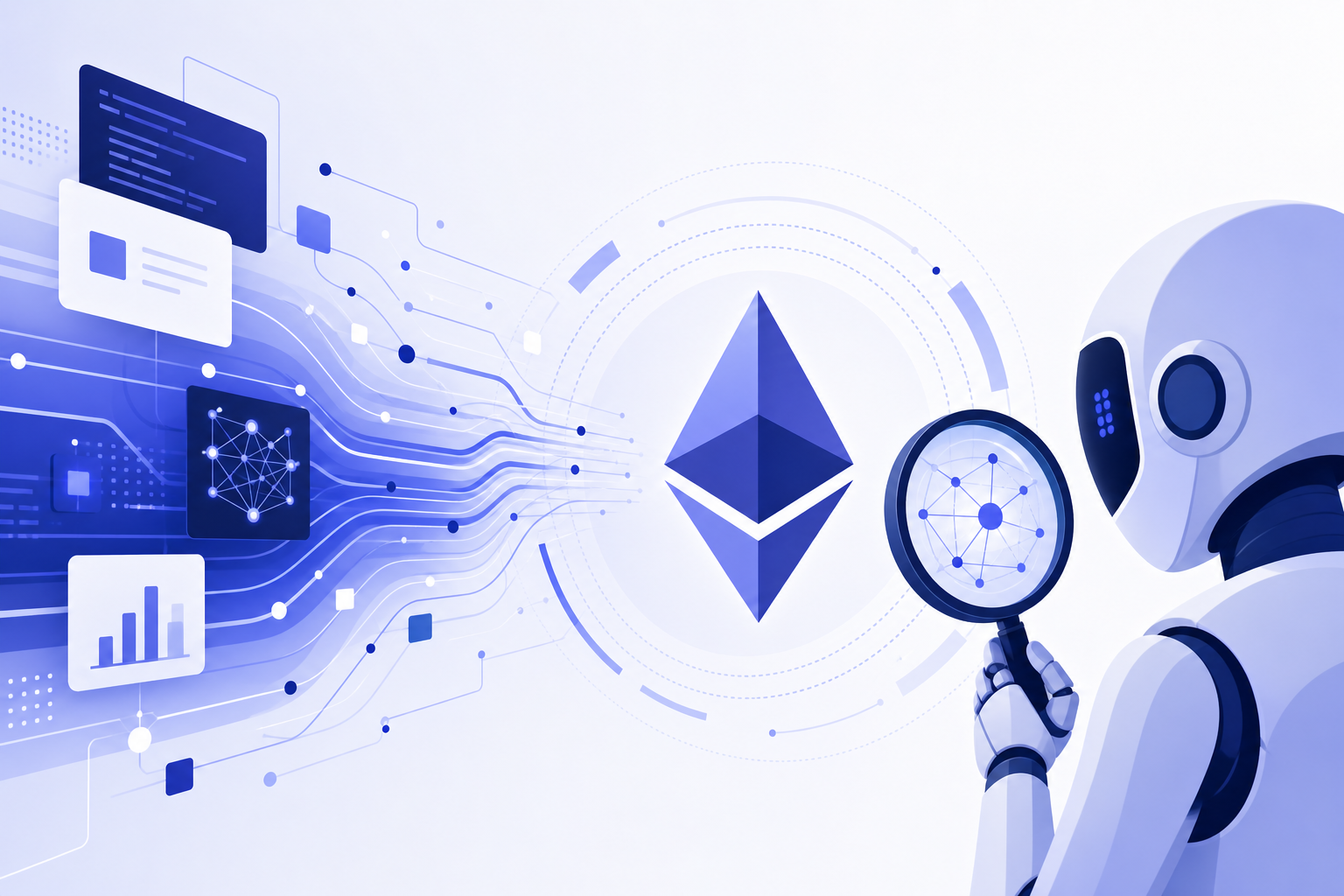
📰 What Actually Happened: CVE-2026-34219 in One Paragraph
According to reporting from Cryptonews, security researchers used AI agents — AI systems that can autonomously read code, form hypotheses, and run tests without a human steering every step — to probe the software that Ethereum nodes use to talk to each other. In the process, they surfaced a weakness in Gossipsub, the 'gossip' protocol Ethereum's network relies on to spread new blocks and messages between thousands of computers. The finding was assigned the identifier CVE-2026-34219 and disclosed publicly in 2026.
A quick decoder ring: 'CVE' stands for Common Vulnerabilities and Exposures. It's the global numbering system for publicly disclosed software flaws — think of it as a case number for a bug, not a measure of how scary it is. The fact that this one got a CVE means it went through a formal disclosure process, which is exactly how responsible security research is supposed to work.
One honest caveat before we go further: this post is based on the public headline and general knowledge of how Gossipsub and CVE disclosures work. For the technical specifics — exact affected versions, severity score, and patch status — always check the original Cryptonews article and the official CVE record, which we link to in the action section below.
🗣️ Gossipsub, Explained Like You're Not a Developer
Ethereum isn't one big server — it's tens of thousands of independent computers (nodes) that all need to agree on the same history of transactions. To stay in sync, they constantly whisper updates to their neighbors, who whisper to their neighbors, until the whole network has heard the news. That whisper system is called Gossipsub, and it's part of a networking toolkit called libp2p that Ethereum's consensus layer is built on.
Here's the useful analogy: Gossipsub is the office rumor mill, but engineered to be fast and hard to sabotage. A flaw in Gossipsub doesn't mean someone can steal your ETH directly — it's not a hole in the vault. It's more like a weakness in the intercom system a bank's branches use to coordinate. Exploited badly, messaging-layer flaws can typically be used to slow the network down, isolate certain nodes, or waste their resources.
That distinction matters for your blood pressure. Networking-layer bugs are serious for the people who run Ethereum's infrastructure, and client teams treat them urgently. But historically, flaws at this layer threaten network health and reliability rather than individual wallets. There is no indication in the headline that user funds were taken.
Who actually needs to patch?
Node operators — the people and companies running Ethereum client software (such as consensus clients that use libp2p's Gossipsub implementation) — are the audience for the fix. If you only hold crypto on an exchange or in a wallet, there is no software update for you to install; the responsibility sits with infrastructure operators.
🤖 The Real Story: AI Agents Are Now Finding Bugs Humans Missed
Strip away the crypto jargon and the genuinely newsworthy part of CVE-2026-34219 is the first three words of the headline: AI agents. A vulnerability in widely deployed, heavily reviewed networking code was surfaced not by a lone researcher squinting at code for months, but by AI systems doing the squinting autonomously.
This has been building for a while. Google's Project Zero publicly reported in late 2024 that its 'Big Sleep' AI agent found a previously unknown, exploitable bug in SQLite — one of the most widely used databases on Earth. Startups like XBOW have built AI penetration testers that climbed to the top of bug-bounty leaderboards. And frontier models — the class that includes Claude Sonnet 4.6, GPT-4o, and Gemini 2.0-era systems — have made 'read this million-line codebase and tell me what's fragile' a task that runs overnight instead of over a quarter.
CVE-2026-34219 is a data point in that trend line landing on blockchain infrastructure: code that secures very large amounts of value and has already been audited by very smart humans. The lesson isn't 'AI beats humans.' It's that AI agents are tireless and cheap to run in parallel, so they can exhaustively check the boring corners — protocol edge cases, weird message orderings — where human attention runs out.
There's a double edge here, and it's worth being adult about it: the same capability is available to attackers. That's why the security industry's consensus is that defenders need to adopt these tools at least as fast as adversaries do — and why responsible disclosure pipelines, like the CVE process this flaw went through, matter more than ever.
💡 Why This Matters for Solopreneurs and Everyday Users
You might be thinking: 'I run a newsletter / an Etsy shop / a consulting practice. Why do I care about Ethereum's plumbing?' Three reasons.
First, if you touch crypto at all — accept it as payment, hold some as an investment, use a service built on Ethereum — network-layer health affects you indirectly. Disclosed-and-patched flaws are the good outcome; the ecosystem finding bugs before attackers do is what keeps the rails you occasionally use reliable.
Second, and more relevant to most readers: the AI-agents-audit-software pattern is coming to the tools you use every day. The same agentic approach that probed Gossipsub can be pointed at a WordPress plugin, a Shopify app, or the code a freelancer delivered to you. Within a typical solopreneur's budget, it's already possible to ask an AI coding assistant to review a codebase for security issues — something that used to require hiring a specialist.
Third, it's a preview of how software trust is changing. When AI agents can continuously audit open-source code, 'this software is widely used, so it's probably fine' stops being the whole story, and 'this software is continuously AI-audited' starts becoming a real signal. Expect vendors to start advertising exactly that.
| Aspect | Human-Led Research | AI-Agent Research |
|---|---|---|
| Speed | Weeks to months per deep audit | Hours to days, runs 24/7 in parallel |
| Cost | Specialist rates, often five figures per audit | Compute costs; falling every year |
| Strengths | Intuition, novel attack ideas, business context | Exhaustive coverage of edge cases, tireless repetition |
| Weaknesses | Limited attention and hours | False positives; needs human verification |
| Real examples | Classic bug bounties, audit firms | Google Big Sleep (SQLite, 2024), XBOW, CVE-2026-34219 |
✅ What You Can Actually Do Today
A news explainer should leave you with actions, not just vibes. Here's the honest split: if you're a regular user, this CVE requires nothing of you beyond awareness. If you run any software — a node, a website, a side-project app — this is a well-timed nudge to borrow the researchers' playbook in miniature.
The checklist below is ordered from 'everyone' to 'only if you run infrastructure.' None of it requires coding skills except the last two items, and even those are mostly copy-paste prompts into an AI assistant.
- ✔Read the primary source: search 'CVE-2026-34219' on cve.org or nvd.nist.gov for the official record and severity rating
- ✔If you hold crypto: no action needed for your wallet — but confirm your exchange/wallet provider publishes security updates, and enable 2FA if you haven't
- ✔If you follow AI news: bookmark Google Project Zero's blog and the Ethereum Foundation blog — both post plain-ish-English write-ups of findings like this
- ✔If you run a website or app: update your dependencies this week (most real-world breaches exploit already-patched flaws)
- ✔Try it yourself: paste a small project into an AI assistant (e.g. Claude Sonnet 4.6 or GPT-4o) and ask: 'Review this code for security vulnerabilities. Explain each finding in plain English with a fix.'
- ✔If you run an Ethereum node: check your client's release notes and Discord/GitHub for a patched version, and update promptly
🔭 The Bigger Picture: What to Watch Next
One CVE rarely matters in isolation; the pattern does. Here's what this story suggests is coming, so you can sound informed when it does.
Expect more AI-discovered CVEs in critical infrastructure — not just crypto, but browsers, operating systems, and the open-source libraries underneath everything. Security teams at major labs and companies have been explicit that autonomous vulnerability discovery is a priority investment area, and every success like this one accelerates adoption.
Expect a disclosure arms race. As AI makes finding bugs cheaper, the window between 'flaw exists' and 'flaw is found' shrinks — for both defenders and attackers. The projects that thrive will be those with fast patch pipelines and healthy disclosure programs. When you evaluate any platform for your business, 'how quickly do they ship security fixes?' is becoming a fair question to ask.
And expect AI-assisted auditing to show up as a consumer-visible feature: app stores, plugin marketplaces, and code platforms flagging 'AI-audited' software the way we flag 'HTTPS' today. CVE-2026-34219 won't be the headline people remember, but 2026 may be remembered as the year AI agents became a normal part of how the internet checks its own homework.
❓ Frequently Asked Questions
Is my Ethereum or crypto at risk because of CVE-2026-34219?
Based on what's public, this is a flaw in Gossipsub, Ethereum's node-to-node messaging layer — not in wallets or smart contracts. Flaws at this layer typically threaten network performance and reliability (slowing or isolating nodes) rather than letting anyone steal funds. There's no indication of stolen funds, and no action is required from ordinary holders. Node operators should update their client software once patched versions are available.
What is Gossipsub in simple terms?
Gossipsub is the protocol Ethereum nodes use to spread news — new blocks, attestations, transactions — across the network, like a highly engineered rumor mill. Each node tells a few neighbors, who tell their neighbors, until everyone knows. It's part of libp2p, a networking toolkit used by Ethereum's consensus layer and other decentralized projects, which is why a flaw here gets attention beyond just Ethereum.
How do AI agents find security vulnerabilities?
An AI agent is an AI model wrapped in a loop that lets it act autonomously: it reads source code, forms hypotheses about what could break, writes and runs test inputs, observes the results, and iterates — thousands of times, without getting tired. Google's Project Zero demonstrated this publicly in 2024 when its Big Sleep agent found a real, previously unknown bug in SQLite. CVE-2026-34219 applies the same pattern to blockchain networking code.
Can I use AI to check my own website or app for security problems?
Yes, at a basic level, today. Paste your code (or connect your repository) into a modern AI assistant such as Claude Sonnet 4.6 or GPT-4o and ask it to review for security vulnerabilities with plain-English explanations. It won't replace a professional audit for high-stakes systems, but it catches common issues — outdated dependencies, injection risks, exposed secrets — that cause most small-business breaches.
🏁 Final Thoughts
The TL;DR on CVE-2026-34219: AI agents probed Ethereum's Gossipsub messaging layer, found a real flaw, and it went through proper public disclosure — the system working as intended. Your wallet isn't the target; the network's plumbing was, and node operators are the ones who need to patch. The durable takeaway is bigger than crypto: autonomous AI bug-hunting has arrived for critical infrastructure, and the same capability is already cheap enough for solopreneurs to point at their own projects. If this breakdown saved you a rabbit hole, subscribe to Agents at Work for plain-English AI news explainers like this one — and drop a comment with the next headline you'd like decoded.
Last updated: July 11, 2026 · Keyword: CVE-2026-34219 · Agents at Work


Comments
Post a Comment