MCP Security Risks in 2026: 11 New Threats Explained
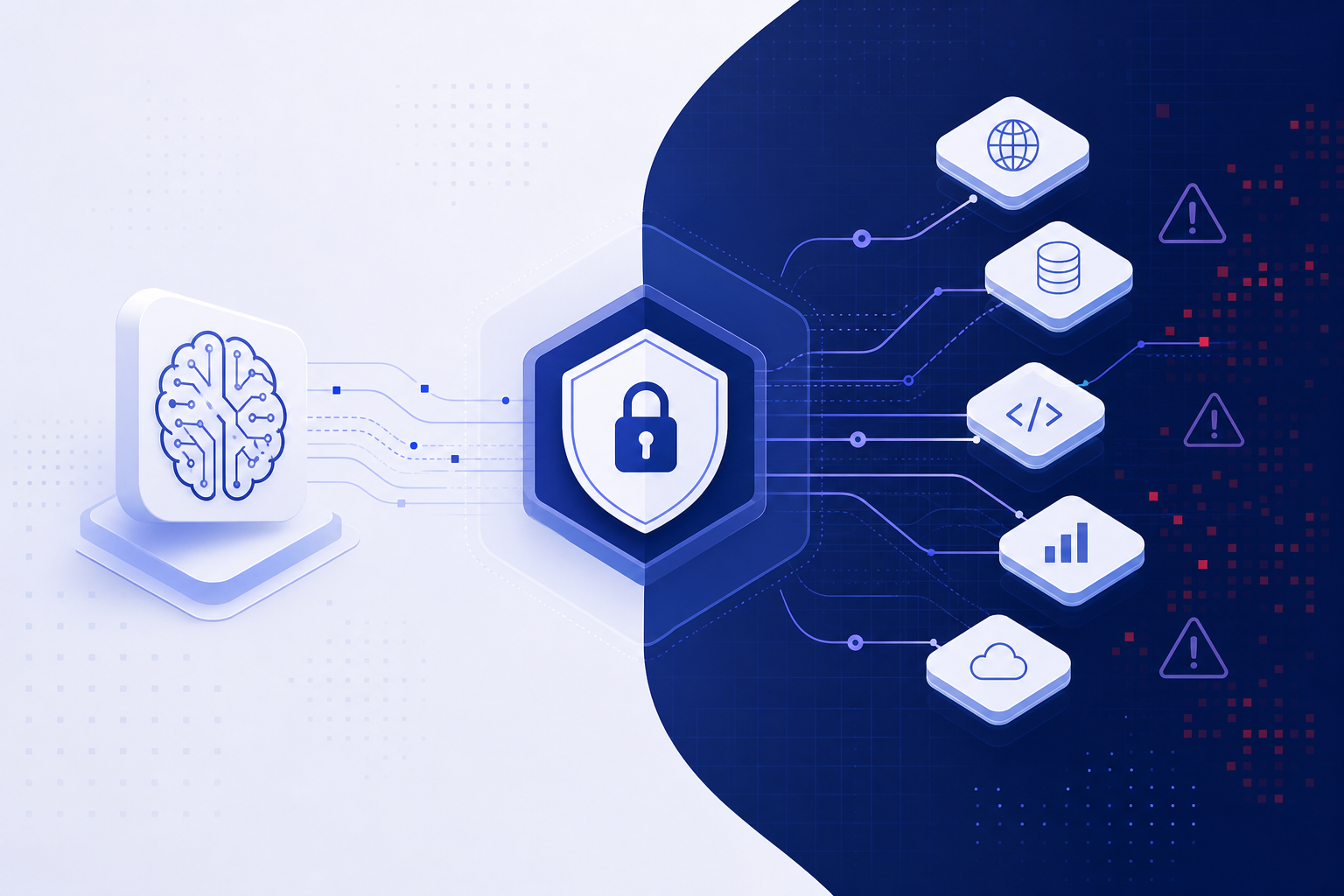
MCP security risks are making headlines in 2026. Security Boulevard flagged 11 emerging threats in the Model Context Protocol that powers AI agents like Claude and ChatGPT connectors. Here is what happened, why it affects you even if you never write code, and three things you can do today.
📰 What Happened: Security Researchers Flag 11 Emerging MCP Risks
Security Boulevard, a widely read cybersecurity publication, published a report outlining 11 emerging security risks tied to MCP, the Model Context Protocol. If that acronym is new to you, MCP is the open standard, originally introduced by Anthropic in late 2024, that lets AI assistants connect to outside tools and data. When Claude reads your Google Drive, when an AI agent checks your calendar, or when ChatGPT-style assistants pull data from your CRM, a protocol like MCP is often the plumbing that makes it work.
The report's core message is twofold. First, MCP adoption exploded faster than its security practices matured, so the connections between AI models and your apps have become an attractive attack surface. Second, the article argues that post-quantum cryptography standards, the new encryption rules NIST finalized in 2024, should be part of how organizations harden these AI connections for the long term.
This is not a story about one specific hack or breach. It is a warning shot: the pipes connecting AI to your data need stronger locks, and the industry is starting to say so out loud.
MCP in One Sentence
Think of MCP as a universal power adapter for AI: instead of building a custom connection for every app, developers plug tools like Gmail, Slack, Notion, or a database into any AI assistant through one shared standard. That convenience is exactly why both major AI companies and attackers now pay close attention to it.
🔑 Why It Matters: Your AI Assistant Now Holds Your Keys
If you are a solopreneur or knowledge worker, you have probably connected an AI tool to something real this year: your inbox, your documents, your customer list, maybe your bank-adjacent bookkeeping app. Every one of those connections runs on credentials, meaning tokens and permissions that act like keys to your accounts. The emerging MCP risks are mostly stories about those keys being stolen, tricked, or misused.
Here is the part that makes AI connections different from ordinary app integrations. A classic app only does what its code says. An AI agent does what its instructions say, and instructions can arrive from anywhere it reads. A poisoned document, a malicious email, or a booby-trapped web page can carry hidden text that quietly tells the agent to do something you never asked for. Security researchers call this prompt injection, and MCP multiplies the stakes because the agent is no longer just chatting, it can act: send emails, edit files, query databases.
The practical consequence for regular users is simple. The question is no longer only 'is this AI model smart and safe', it is 'what did I plug it into, and who controls those plugs'. That mental shift is the single most useful thing to take away from this news cycle.
The 'Harvest Now, Decrypt Later' Problem
The post-quantum angle sounds futuristic but has a present-day logic. Attackers can record encrypted traffic today and store it until quantum computers become powerful enough to break current encryption. Data flowing through AI connections, including contracts, health notes, and financial records, can stay sensitive for decades. That is why NIST finalized post-quantum encryption standards, known as ML-KEM and ML-DSA under FIPS 203 and 204, back in August 2024, and why security writers now push AI infrastructure to adopt them early.
🗂️ The Risk Categories, Translated Into Plain English
You do not need to memorize 11 technical items. The emerging MCP risks discussed across the security community, including in the Security Boulevard piece, cluster into a handful of themes that any non-developer can understand. The table below maps the technical jargon to what it actually means for you.
One theme deserves special emphasis: tool poisoning and lookalike servers. Because anyone can publish an MCP server, a malicious developer can offer a 'free calendar connector' that also skims every message passing through it. It is the same dynamic as fake browser extensions or lookalike mobile apps, replayed on a newer, less-policed platform.
The second big theme is weak identity. Many early MCP setups shipped without strong authentication, so anything that could reach the server could use it. Standards bodies and vendors, including Anthropic with its MCP authorization spec updates, have been tightening this throughout 2025 and 2026, but plenty of older or hobbyist servers still run with the doors unlocked.
| Risk theme (jargon) | What it means for you | Everyday analogy |
|---|---|---|
| Prompt injection | Hidden instructions in a file or email hijack your AI agent | A forged note that tricks your assistant |
| Tool poisoning | A malicious or tampered connector steals data it handles | A fake ATM skimmer |
| Credential and token theft | Stored login keys for your apps get stolen from the server | Leaving labeled house keys under the mat |
| Weak or missing authentication | Anyone who finds the server can use your connections | An office with no badge reader |
| Supply chain compromise | A trusted connector gets a bad update later | A safe brand recalled after tampering |
| Excessive permissions | The agent can touch far more than the task needs | Giving a valet your entire keychain |
| Quantum-vulnerable encryption | Traffic recorded now could be decrypted years later | Locked mail that a future master key opens |
🧬 Where Post-Quantum Standards Fit In
The headline pairs two topics that rarely share a sentence: AI agent plumbing and quantum-resistant math. The connection is more practical than it sounds. MCP traffic rides on the same encryption, mainly TLS, that protects the rest of the web. Today's TLS relies on math problems that a sufficiently large quantum computer could eventually solve, which would expose everything encrypted with it.
The fix is not to wait. NIST published its first finalized post-quantum cryptography standards in August 2024, and since then major infrastructure providers have been rolling out hybrid encryption that combines classical and quantum-resistant algorithms. Chrome, Cloudflare, Apple's iMessage, and Signal all moved early. The argument in this news piece is that AI connection layers like MCP should follow the same path now, because agent traffic often carries exactly the kind of long-lived sensitive data that 'harvest now, decrypt later' attackers want.
For a non-technical reader, the takeaway is a vocabulary upgrade, not a to-do list. When a vendor says it supports 'post-quantum' or 'PQC-ready' encryption, that is a genuine security signal worth favoring, the same way 'end-to-end encrypted' became a checkbox worth looking for in messaging apps.
✅ What You Can Do Today: A 10-Minute Safety Pass
You cannot patch a protocol, but you control your own connections, and that is where most real-world risk lives. Set a timer for ten minutes and run the checklist below on whatever AI tools you use, whether that is Claude with connectors, ChatGPT with GPT-4o and its integrations, or Gemini 2.0 hooked into Google Workspace.
The single highest-value habit is permission hygiene. Before connecting an AI to any account, ask what the worst case looks like if that connection were fully abused, then grant the narrowest access that still gets the job done. Read-only beats read-write. One folder beats the whole drive.
The second habit is source hygiene. Only install connectors and MCP servers from official directories or vendors you already trust, such as the official integration listings from Anthropic, OpenAI, or Google. Treat a random 'free AI connector' from an unknown GitHub repo the way you would treat a random .exe file in 2005.
- ✔List every app your AI assistant can currently access, then disconnect anything you have not used in 30 days
- ✔Switch connections to read-only or single-folder access wherever the option exists
- ✔Only add connectors from official directories, never from unverified links or repos
- ✔Turn on two-factor authentication for every account an AI can reach
- ✔Ask the AI to confirm before it sends, deletes, or spends anything, and keep approval prompts enabled
- ✔When choosing between similar tools, prefer vendors that mention post-quantum or PQC-ready encryption
🔭 The Bigger Picture: Growing Pains, Not a Reason to Unplug
It would be easy to read a headline about 11 security risks and conclude that AI agents are too dangerous to use. That is the wrong lesson. Every transformative connectivity layer went through this exact phase: early websites before HTTPS, early app stores before review processes, early Wi-Fi before WPA. Researchers publishing risk lists is how a young standard grows up in public.
The encouraging part of this story is the timeline. MCP is barely two years old, and it already has an active security research community, formal authorization specifications, vendor-run connector directories, and now serious conversations about post-quantum readiness. Compare that with email, which spent decades without meaningful authentication and still delivers most of the world's phishing.
For solopreneurs, the strategic move is to keep using AI agents for the leverage they provide while treating connections as a managed inventory rather than a set-and-forget convenience. The people who get burned in every technology wave are rarely the cautious adopters. They are the ones who connected everything once and never looked again.
❓ Frequently Asked Questions
What is MCP and do I already use it?
MCP, the Model Context Protocol, is an open standard introduced by Anthropic in November 2024 that lets AI assistants connect to outside apps and data. If you have connected Claude, a ChatGPT-style assistant, or an AI coding tool to your files, email, or other services through a connector or integration, there is a good chance MCP or something like it is doing the work behind the scenes.
Has MCP actually been hacked, or is this theoretical?
Security researchers have demonstrated real attacks against MCP setups, including prompt injection through poisoned content and malicious connector servers, and misconfigured servers have been found exposed online. The Security Boulevard piece is a risk analysis rather than a report of one specific breach. The risks are practical, not hypothetical, but the sky is not falling for careful users.
What does quantum computing have to do with AI security?
Future quantum computers could break the encryption that protects most internet traffic today, including the traffic between AI agents and your apps. Attackers can record encrypted data now and decrypt it later, so NIST finalized post-quantum encryption standards in August 2024. The article argues AI infrastructure like MCP should adopt these standards early because agent traffic often carries long-lived sensitive data.
Should I stop connecting AI tools to my accounts?
No, but connect deliberately. Use official connectors only, grant the minimum permissions each task needs, prefer read-only access, keep approval prompts turned on for actions like sending or deleting, and review your connected apps monthly. Those habits eliminate most of the practical risk while keeping the productivity benefits.
🏁 Final Thoughts
The short version: security researchers flagged 11 emerging risks in MCP, the connective tissue between AI assistants and your apps, and recommended post-quantum encryption standards as part of the long-term fix. Nothing here says stop using AI agents. It says treat AI connections like keys: know how many you have handed out, hand out as few as possible, and take back the ones you no longer use. Run the 10-minute safety pass above this week, and you will be ahead of the vast majority of AI users. If this explainer saved you a research rabbit hole, subscribe to Agents at Work for a plain-English breakdown of AI news every week, and drop a comment with the AI tools you have connected. I read every one.
Last updated: July 16, 2026 · Keyword: MCP security risks · Agents at Work


Comments
Post a Comment