NVIDIA Cosmos 3 Edge: What the 2026 Release Means for You
NVIDIA just introduced Cosmos 3 Edge, an AI world model built to run on devices instead of data centers. Here is what that means for you, in plain English.
📰 What Just Happened?
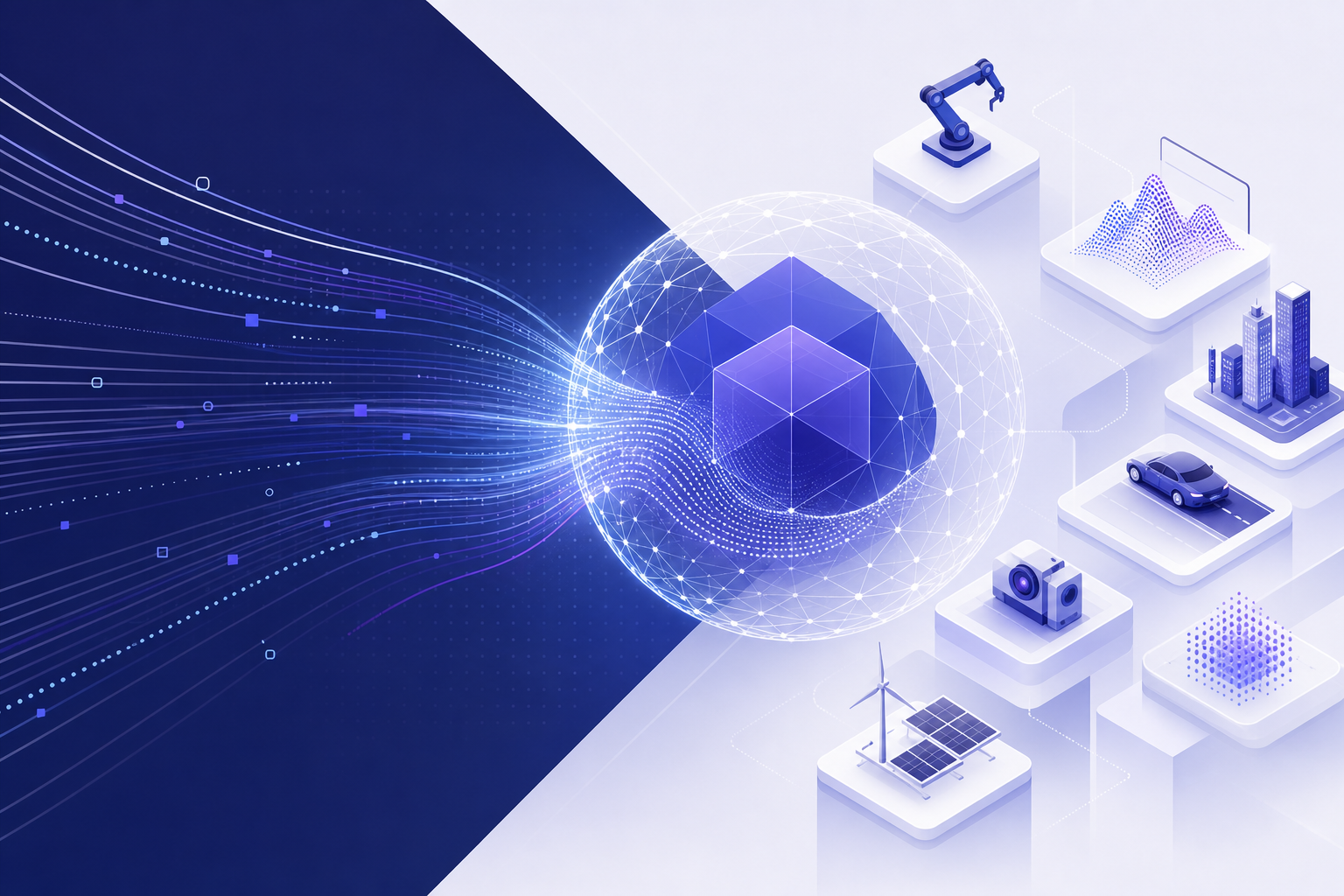
NVIDIA announced Cosmos 3 Edge in a post on its official Hugging Face blog. The name tells you the two things that matter. First, this is a new generation of Cosmos, NVIDIA's family of world foundation models, which are AI models that understand and simulate the physical world rather than just text. Second, the word Edge signals the headline change: this release targets edge devices, meaning hardware out in the real world such as robots, cameras, drones, and embedded computers, instead of racks of GPUs in a data center.
NVIDIA first launched the Cosmos platform at CES in January 2025 and has been shipping updated versions since, including the Cosmos Predict 2.5 and Cosmos Transfer 2.5 generation in late 2025. Publishing the Cosmos 3 Edge announcement on Hugging Face, the main hub for open AI models, continues NVIDIA's pattern of releasing Cosmos models openly so developers can download and build on them.
In short: the company that dominates AI chips is pushing its physical-world AI models out of the cloud and onto the machines around us. That is the news.
🌍 Quick Refresher: What Is NVIDIA Cosmos?
Chatbots like ChatGPT (GPT-4o and its successors) or Claude Sonnet 4.6 are language models. They predict words. Cosmos models are world models. They learn from huge amounts of video how the physical world behaves: how objects fall, how cars move through traffic, how a warehouse aisle looks from a robot's camera.
Why would anyone want that? Because the next wave of AI, often called physical AI, lives in robots, self-driving vehicles, and smart cameras. Those machines need to predict what happens next in the real world, and they need endless realistic training footage. World models generate that synthetic training data and provide the physical common sense.
The Cosmos family has had three main branches, and Cosmos 3 Edge extends this lineup toward on-device use.
| Cosmos model family | Job in plain English | Typical use |
|---|---|---|
| Cosmos Predict | Generates video of what happens next in a scene | Training robots and autonomous vehicles |
| Cosmos Transfer | Turns rough simulation footage into realistic video | Creating synthetic training data at scale |
| Cosmos Reason | Watches a scene and reasons about it in language | Video analysis and robot decision-making |
| Cosmos 3 Edge | Brings world-model capability to on-device hardware | Robots, drones, cameras, embedded systems |
⚡ Why 'Edge' Is the Big Word Here
Running AI on the edge means the model runs on the device itself, not on a server it has to phone home to. For physical AI, that distinction is everything. A robot arm or a delivery drone cannot wait for a round trip to the cloud before deciding whether to stop. It needs answers in milliseconds, even when the Wi-Fi drops.
Edge AI also changes the economics and the privacy story. On-device inference means no per-request cloud bill and no video streams leaving the building, which matters for factories, hospitals, and retail stores that cannot ship camera footage to a third party.
Until recently, world models were too heavy to live anywhere except a data center. An edge-focused Cosmos release signals that NVIDIA believes this class of model can now be squeezed onto the kind of hardware that ships inside real products, such as its Jetson line of robotics computers. That is a milestone for the whole physical AI trend, not just for NVIDIA.
💼 Why It Matters for Solopreneurs and Regular Users
You probably will not download a world model this week, and that is fine. The reason to pay attention is what this release tells you about where AI is going, and where the opportunities are opening up.
First, physical AI is leaving the lab. When a major vendor optimizes its world models for edge devices, it expects real deployments: smarter warehouse robots, checkout-free stores, safety cameras that understand what they see. If you serve clients in logistics, retail, manufacturing, agriculture, or security, this technology will show up in your industry conversations within the next couple of years, and being the person who can explain it is a genuine edge.
Second, open releases lower the barrier for small players. NVIDIA has consistently published Cosmos models with downloadable weights on Hugging Face under its open model license. Historically, only companies with huge budgets could touch robotics AI. Open, edge-ready models mean a two-person startup, or a solo consultant with a capable GPU, can prototype physical AI ideas without raising venture capital first.
Third, there is a content and education gap. Most coverage of world models is written for machine-learning engineers. If you create content, run a newsletter, or sell consulting, plain-English explanations of physical AI are an underserved niche, and you are reading proof that demand exists.
🚀 How to Explore Cosmos 3 Edge Today
You do not need to be a developer to poke around, and everything below is free to look at. Fifteen minutes is enough to get a real feel for what this technology does.
Start with the announcement itself, then browse the model pages. Hugging Face model cards are surprisingly readable: they state what the model does, what hardware it targets, and what the license allows. Even skimming the demo videos will teach you more than most news coverage.
If you are technical
Check the model card for hardware requirements and the license terms, then follow the quick-start instructions in NVIDIA's repositories. Cosmos models are also typically available to test through NVIDIA's hosted demos at build.nvidia.com before you commit to downloading anything.
- ✔Read the official announcement at huggingface.co/blog/nvidia/cosmos3edge
- ✔Browse NVIDIA's model pages at huggingface.co/nvidia and open the Cosmos model cards
- ✔Watch the demo clips on the announcement page to see world models in action
- ✔Try hosted NVIDIA model demos at build.nvidia.com if you want a no-install test
- ✔Note the license terms before any commercial use
- ✔If you write or consult, draft one plain-English explainer for your own audience while the news is fresh
🔍 What to Verify in the Official Post
A responsible explainer separates what the name and track record tell us from what only the official post can confirm. Model sizes, benchmark numbers, exact supported hardware, context length, and licensing details vary between Cosmos releases, so read those directly from NVIDIA's announcement and the model cards rather than from second-hand summaries, this article included.
The key questions worth checking as you read: which parameter sizes ship in this release, which devices NVIDIA officially supports, whether the license permits commercial use for your case, and how the models score against the previous Cosmos 2.5 generation. Announcement posts usually answer all four in the first few screens.
Bookmarking the primary source is a good habit for any AI news. Headlines compress, and details like license terms are exactly where compression hurts you.
❓ Frequently Asked Questions
What is NVIDIA Cosmos 3 Edge in simple terms?
It is the newest generation of NVIDIA's Cosmos world foundation models, announced on the company's Hugging Face blog. World models are AI systems that understand and simulate the physical world from video. The Edge in the name means this release is built to run on devices like robots, drones, and embedded computers instead of only on cloud servers.
Is Cosmos 3 Edge free to use?
NVIDIA has released previous Cosmos models with openly downloadable weights on Hugging Face under its own open model license, which allows broad use with some conditions. Check the license section on the Cosmos 3 Edge model card for the exact terms before using it commercially, since terms can differ between releases.
How is a world model different from ChatGPT or Claude?
Language models like GPT-4o or Claude Sonnet 4.6 learn from text and predict words, which makes them great at writing and reasoning in language. World models learn from video and predict physical outcomes, like where a box lands or how a car merges. You would use a chatbot to draft an email and a world model to train a robot.
Do I need NVIDIA hardware to try Cosmos models?
To run them yourself, you need a suitable GPU, and NVIDIA's own hardware such as the Jetson robotics line is the natural target for edge deployment. To simply explore, you need nothing special: the announcement, demo videos, and model cards are free to read on Hugging Face, and NVIDIA hosts browser-based demos of many models at build.nvidia.com.
🏁 Final Thoughts
The takeaway from Cosmos 3 Edge is bigger than one model release: physical AI is moving out of the data center and onto the devices around us, and NVIDIA is publishing the building blocks in the open. You do not need to train a robot to benefit. Understanding this shift early is an advantage for anyone who advises clients, creates content, or builds products in industries that robots and smart cameras are about to touch. Spend fifteen minutes with the official announcement, skim one model card, and you will be ahead of most of the market. If this explainer saved you an hour of jargon, subscribe to Agents at Work for the next one, and drop a comment with the AI headline you want decoded next.
Last updated: July 21, 2026 · Keyword: NVIDIA Cosmos 3 Edge · Agents at Work


Comments
Post a Comment