TikTok Agentic Hub Explained: AI Tools for Creators in 2026
TikTok Agentic Hub is making headlines in 2026 as TikTok pushes AI agents that create, schedule, and optimize content for you. Confused about what it actually is? Here's a plain-English breakdown of what happened, why it matters, and how to act on it today.
📰 What Happened: TikTok's AI Tools Get an Agentic Upgrade
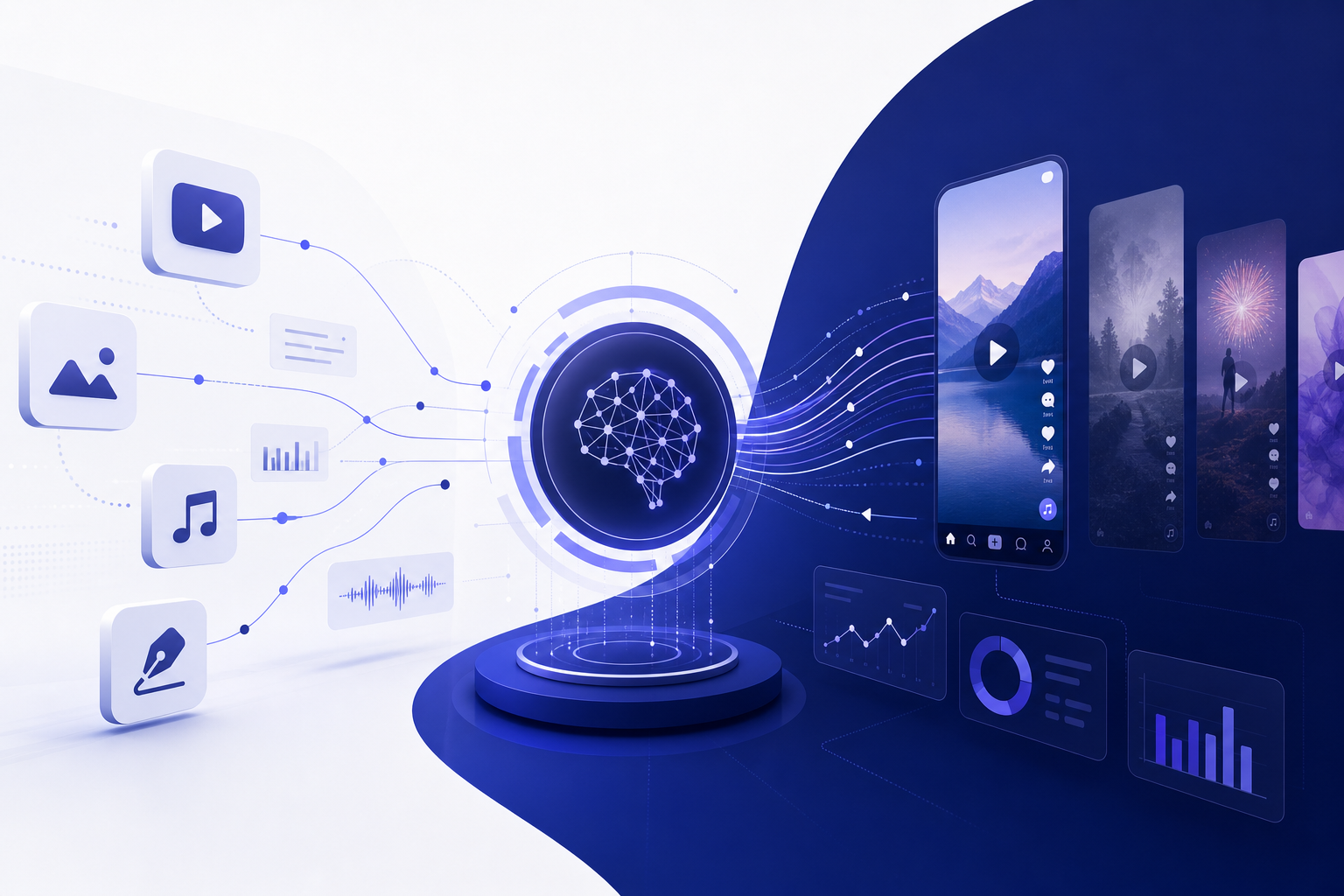
A report from quasa.io spotlighted what it calls the TikTok 'Agentic Hub', shorthand for TikTok consolidating its growing stack of AI tools for creators and advertisers into one agent-driven workflow layer in 2026. Instead of offering scattered features (a caption generator here, an editing tool there), TikTok is moving toward AI agents: software that doesn't just suggest, but actually executes multi-step tasks like drafting videos, generating avatars, localizing content, and optimizing ad campaigns with minimal human input.
This builds on tools TikTok has already shipped publicly: the Symphony creative suite (including Symphony Creative Studio for AI-generated video and digital avatars), Smart+ for automated ad campaigns, and AI-assisted features inside TikTok Shop for sellers. The 'agentic' framing is the new part, 2026 is the year platforms stopped selling AI as a helper and started selling it as a worker.
One caveat worth stating plainly: 'Agentic Hub' is how this coverage describes TikTok's direction, not necessarily an official product name you'll find as a single button in the app today. Details like rollout timing, regional availability, and pricing haven't been fully confirmed by TikTok, so treat specifics from third-party coverage with healthy skepticism.
💡 Why It Matters: The Creator Bottleneck Is Production, Not Ideas
If you're a solopreneur or knowledge worker, your problem was never a lack of content ideas, it's that producing, editing, captioning, and posting consistently eats hours you don't have. Agentic tools attack exactly that bottleneck. An agent that can turn a product link or a blog post into a draft video, generate an avatar spokesperson, and schedule variations for testing collapses a multi-day workflow into minutes.
It also changes the competitive math. When production cost drops toward zero, volume and iteration speed stop being advantages reserved for teams with editors and media buyers. A one-person business can realistically run the kind of always-on, multi-variant content operation that used to require an agency. The flip side: everyone else can too, so feeds get noisier and genuinely distinctive ideas matter more, not less.
Finally, this is part of a much bigger 2026 pattern. OpenAI, Google, and Anthropic have all pushed agentic capabilities hard, think computer-using agents built on models like GPT-4o and its successors, Gemini 2.0's agent features, and Claude-based agents such as Claude Sonnet 4.6 powering autonomous workflows. TikTok wiring agents directly into the platform where distribution happens is the logical next step: the agent doesn't just make the content, it lives where the content gets seen.
Who benefits most
Small e-commerce sellers (TikTok Shop), coaches and consultants building an audience, and marketers running paid campaigns benefit first, these are workflows TikTok's existing AI tools (Symphony, Smart+) already target. If you post occasionally for fun, nothing changes for you yet.
🧰 What's Actually in TikTok's AI Toolbox Right Now
Because 'Agentic Hub' coverage bundles several things together, it helps to separate what TikTok has publicly shipped from what's directional. Here's the landscape as of mid-2026, based on TikTok's own announcements of its Symphony suite, Smart+ campaigns, and Shop seller tools.
The common thread: each tool is drifting from 'assist' (you do the work, AI suggests) toward 'agent' (AI does the work, you approve). That approval step is the part you should never automate away, more on that in the checklist below.
| Tool / Area | What it does | Who it's for | Agentic level |
|---|---|---|---|
| Symphony Creative Studio | Generates video drafts, digital avatars, and translations/dubbing from prompts or product info | Creators & advertisers | High, produces finished drafts |
| Smart+ Campaigns | Automates ad targeting, bidding, and creative selection end-to-end | Advertisers & sellers | High, runs with minimal input |
| TikTok Shop AI features | Product listing help, seller assistants, recommendation optimization | E-commerce sellers | Medium, assists key steps |
| In-app creator tools (captions, effects, editing suggestions) | Speeds up manual editing and posting | All creators | Low, you stay hands-on |
🚀 How to Try It Today: 5 Practical Steps
You don't need to wait for an official 'hub' to benefit. Most of the underlying tools are accessible right now if you know where to look. Here's a realistic path for a non-technical solo operator to test TikTok's AI stack this week, free where possible, and low-risk everywhere.
Step 1: Open TikTok's business side. Go to ads.tiktok.com and create a free TikTok for Business account (you don't have to spend on ads to explore the creative tools). Step 2: Find Symphony Creative Studio under the creative tools section and generate one AI video draft from a URL or product description, judge the quality against your niche yourself. Step 3: If you sell products, apply for TikTok Shop in your region and turn on its AI listing suggestions. Step 4: On the organic side, test the in-app AI features (auto-captions, editing suggestions) on one real post. Step 5: Only after you've seen output quality should you consider Smart+ with a small test budget you can afford to lose.
Set a 30-minute timer for the first session. The goal isn't mastery, it's forming your own opinion on whether the output meets your bar before any money or brand reputation is on the line.
- ✔Create a free TikTok for Business account at ads.tiktok.com
- ✔Generate one test video in Symphony Creative Studio
- ✔Review AI output for brand voice and factual accuracy before posting
- ✔Check the AI-generated content label, TikTok requires disclosure of realistic AI media
- ✔Start Smart+ only with a small, capped test budget
- ✔Keep a human approval step in every automated workflow
⚠️ The Risks Nobody Puts in the Headline
Automation on someone else's platform always carries platform risk. TikTok's rules require labeling realistic AI-generated content, and unlabeled synthetic media can be removed. If an agent posts on your behalf, you're still the one accountable for every claim it makes, especially for anything touching health, finance, or product performance.
There's also a sameness problem. When thousands of sellers use the same avatar generator and the same templates, feeds fill with content that looks eerily alike, and audiences scroll past it. The creators winning with these tools treat AI output as a first draft to inject personality into, not a finished product.
And remember the strategic picture: TikTok's U.S. operations went through a major ownership restructuring finalized in early 2026, and platform policies can shift. Don't build your entire business on one platform's agent doing everything, use the tools, but keep your email list, your site, and your customer relationships where no algorithm change can touch them.
🌐 The Bigger Picture: Every Platform Is Becoming an Agent Platform
TikTok isn't acting in a vacuum. Meta has pushed AI-generated ad creative through Advantage+ for years, YouTube keeps expanding AI tools for Shorts creators, and Google's Performance Max runs campaigns nearly autonomously. On the model side, the agentic wave that started with tool-using models like GPT-4o, Gemini 2.0, and Claude's computer-use capabilities has matured into production agents that businesses actually deploy.
What makes the TikTok story notable is vertical integration: the same company controls the creation tools, the distribution algorithm, and (via TikTok Shop) the checkout. An agent operating inside that loop can theoretically go from product to video to sale without you touching anything in between. That's genuinely new territory for solo operators, and a genuinely new dependency to think carefully about.
The practical takeaway for 2026: learn to direct agents rather than compete with them on production speed. Your taste, your niche knowledge, and your judgment about what your audience actually wants are the inputs no hub can generate.
❓ Frequently Asked Questions
Is TikTok Agentic Hub an official TikTok product I can download?
Not as a single official app or button. 'Agentic Hub' is how coverage like the quasa.io piece describes TikTok's consolidation of AI and automation tools in 2026. The concrete, publicly available pieces are Symphony Creative Studio, Smart+ campaigns, TikTok Shop AI features, and in-app creator tools, accessible mainly through TikTok for Business at ads.tiktok.com.
Are TikTok's AI creator tools free to use?
Creating a TikTok for Business account and exploring Symphony's creative tools costs nothing, and in-app features like auto-captions are free. Smart+ automated campaigns require ad spend, and TikTok Shop involves seller fees. Since exact terms vary by region and change over time, always check the current terms inside your own account rather than relying on third-party articles.
Will TikTok penalize AI-generated content?
No, TikTok itself provides the generation tools, but it requires realistic AI-generated media to be labeled as such, and unlabeled synthetic content can be removed. Content that's misleading, spammy, or low-effort will also underperform regardless of how it was made. Label AI content honestly and review everything an agent produces before it goes live.
Do I need technical skills to use these automation tools?
No. TikTok's tools are point-and-click and designed for non-developers: you provide a product link, prompt, or existing asset, and the AI generates drafts. The skill that matters is editorial judgment, knowing which AI drafts are good enough for your brand and which need a human rewrite.
🏁 Final Thoughts
The short version: TikTok's 'Agentic Hub' story is less about one new product and more about a direction, TikTok assembling its Symphony creative suite, Smart+ automation, and Shop AI into an agent-driven workflow where AI does the producing and you do the approving. For solopreneurs, that's a real opportunity to run a content operation that used to need a team, provided you keep a human check on quality, label AI content properly, and never bet your whole business on one platform. Try one tool this week, a single Symphony draft will teach you more than ten headlines. If this explainer saved you a research rabbit hole, subscribe to Agents at Work for plain-English breakdowns of AI news, and drop a comment with the tool you want unpacked next.
Last updated: July 11, 2026 · Keyword: TikTok Agentic Hub · Agents at Work


Comments
Post a Comment