UST + Claude Bet on Physical AI: What It Means in 2026
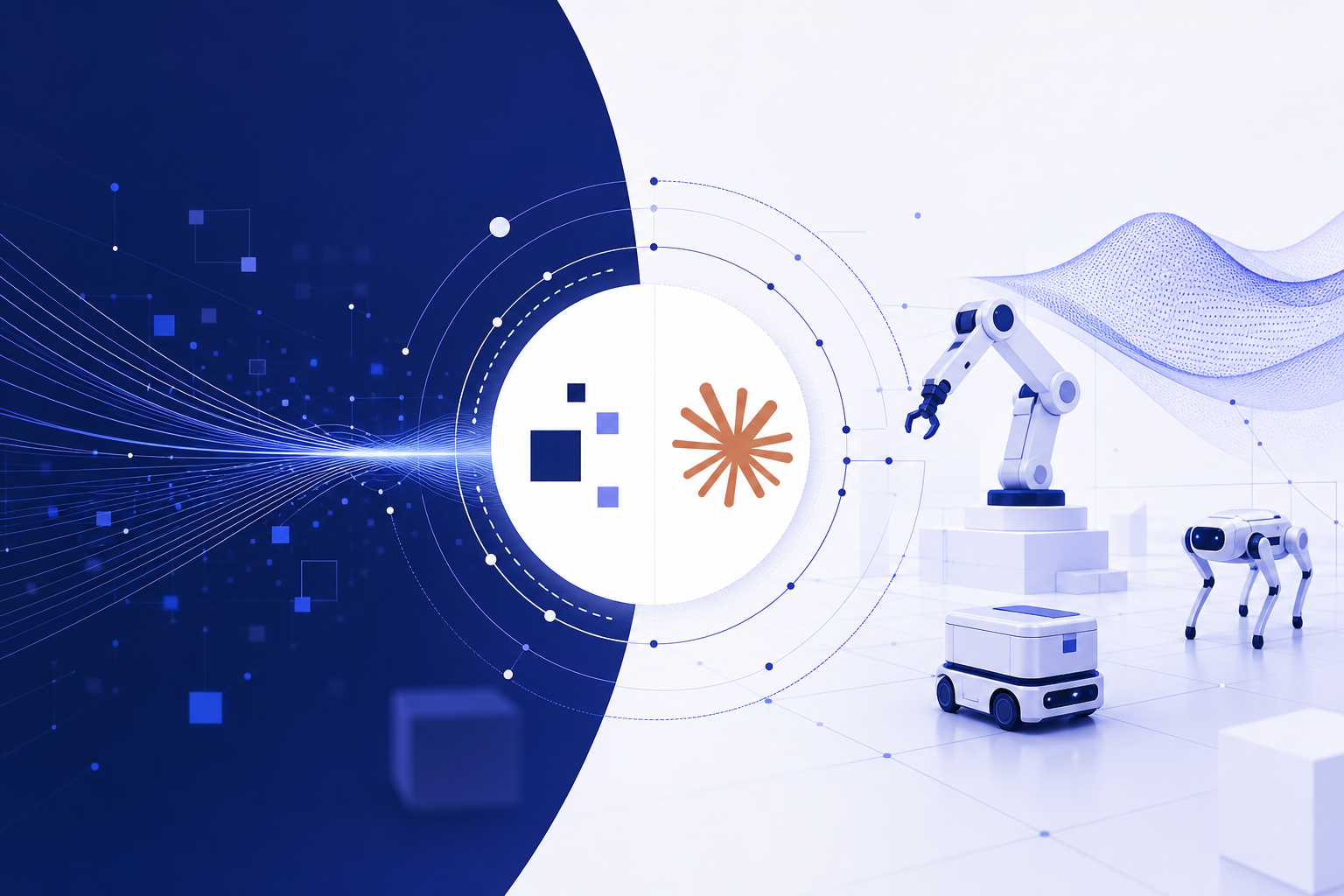
Physical AI just made headlines: The Futurum Group asks whether UST and Anthropic's Claude can turn AI that acts in the real world into an enterprise standard. Here's what happened, why it matters to you, and what to do today.
📰 What Actually Happened
The Futurum Group, a well-known technology analyst firm, published an analysis with a provocative question in the title: can UST and Claude make physical AI the next enterprise standard?
Here's the cast of characters, in case the names are new to you. UST is a large global digital transformation company, the kind of firm big enterprises hire to actually implement new technology across factories, hospitals, banks, and retail chains. Claude is the AI assistant family built by Anthropic, whose current flagship models include Claude Sonnet 4.6 and the Opus 4.x line. And 'physical AI' is the industry's shorthand for AI that doesn't just live in a chat window, it perceives, reasons about, and acts in the physical world: factory floors, warehouses, robots, sensors, and machines.
The analysis examines UST's work pairing its industry implementation muscle with Anthropic's Claude models, and asks whether that combination could move physical AI from flashy demos to something enterprises adopt as routinely as they adopted cloud computing. Note the framing: it's an analyst's assessment of a strategic direction, not a product launch you can buy off a shelf today.
🤖 Physical AI, Explained Without the Jargon
If you've used ChatGPT, Claude, or Gemini, you've used digital AI: it reads text, looks at images, and writes things back. Physical AI is the next layer, AI systems connected to cameras, sensors, robots, and industrial equipment, so they can notice what's happening in the real world and take (or recommend) real-world actions.
Think of a warehouse where AI watches camera feeds to spot a blocked conveyor belt, reasons about the cause, and dispatches a fix, instead of a human catching it hours later. Or a factory where an AI agent reads sensor data, predicts a machine failure, and schedules maintenance before anything breaks.
The key shift in 2026 is that reasoning models like Claude are getting good enough to be the 'brain' coordinating these systems, while companies like UST supply the messy integration work, wiring the AI into cameras, machines, safety rules, and legacy software. That pairing of brain plus plumbing is exactly what the Futurum piece is evaluating.
Digital AI vs. Physical AI at a Glance
The table below is the fastest way to see the difference, same underlying AI capability, very different stakes and environments.
| Digital AI (what you use today) | Physical AI (what this news is about) | |
|---|---|---|
| Where it lives | Chat apps, browsers, documents | Factories, warehouses, robots, sensors |
| What it does | Writes, summarizes, analyzes, codes | Monitors, predicts, coordinates real-world actions |
| Cost of a mistake | A bad paragraph you can edit | Downtime, safety risks, broken equipment |
| Who deploys it | You, in minutes | Enterprises with integrators like UST, over months |
| Example | Claude drafts your proposal | Claude-powered agent flags a failing machine |
💡 Why This Matters Even If You Don't Own a Factory
Fair question: you're a solopreneur or knowledge worker, not a plant manager. Why care?
First, this signals where AI budgets and reliability standards are heading. When analysts start asking whether something can become an 'enterprise standard,' it means the technology is crossing from experiment to infrastructure. The safety, auditability, and reliability work that physical AI demands, because mistakes break real things, tends to flow back into the everyday AI tools you use. A Claude that's trustworthy enough to help run a warehouse is a Claude that's more dependable for your invoices and client work.
Second, it validates the 'AI agent' pattern you're already hearing about everywhere. Physical AI is essentially agentic AI with a body: an AI that observes, decides, and acts with limited supervision. If enterprises standardize on that pattern for physical operations, the tooling, best practices, and job opportunities around building and supervising agents will grow fast. Understanding this space early is a genuine career and business edge.
Third, there's a services economy forming around it. UST's role in this story, the integrator that makes AI work in a specific business, is a role that exists at every scale. Freelancers and small consultancies are already doing miniature versions of it: connecting AI to a client's calendar, inventory sheet, or booking system. The headline is about giants, but the playbook trickles down.
🧠 Where Claude Fits, and Why Anthropic Was Chosen for This Story
Anthropic has spent years positioning Claude as the 'safe and steerable' enterprise AI, a reputation that matters enormously once AI touches physical equipment. Models like Claude Sonnet 4.6 are built for long, multi-step agentic work: using tools, following operating constraints, and explaining their reasoning. Those are precisely the traits you want in a system supervising real-world operations, where 'mostly right' isn't good enough.
The Futurum analysis is essentially weighing whether that model capability, combined with UST's on-the-ground implementation experience across industries like healthcare, manufacturing, retail, and finance, adds up to a repeatable formula other enterprises will copy.
One honest caveat: 'enterprise standard' is a high bar. Cloud computing took a decade to earn that label. Physical AI still faces hard problems, safety certification, liability, integration with decades-old machinery, and worker trust. The analyst framing is a question, not a verdict, and that's the right way to read it.
🚀 How You Can Act on This Today
You can't order 'physical AI' from a website today, it's deployed through enterprise engagements. But you can position yourself smartly right now, whether your goal is staying informed, upskilling, or finding business opportunities.
The most practical move for a non-developer is to get hands-on with the agentic side of Claude that physical AI is built on. Try giving Claude (claude.ai) a multi-step task with real constraints, 'check this data, flag anomalies, draft the email', and watch how it plans and executes. That's the same reasoning pattern, minus the robots.
If you serve small business clients, start a simple offer around 'operational AI': connecting AI to the physical-ish workflows they already have, like inventory counts, appointment scheduling, or equipment maintenance logs. You don't need a factory to apply the observe-decide-act pattern.
- ✔Read the original Futurum Group analysis (search 'Futurum UST Claude Physical AI') for the analyst's full take
- ✔Try an agentic, multi-step task in Claude (claude.ai) to feel how AI 'brains' plan and act
- ✔Skim Anthropic's news page (anthropic.com/news) for enterprise and partnership announcements
- ✔Follow the term 'physical AI' in Google Alerts, it's becoming a distinct category from generative AI
- ✔If you consult: list 3 client workflows where AI could observe → decide → act, and pitch the smallest one
- ✔Bookmark UST's newsroom (ust.com) to see how integrators describe these deployments to buyers
🔭 What to Watch Next
The signal that physical AI is really becoming a standard won't be another analyst piece, it will be repeatability. Watch for named customer deployments with measurable results (downtime reduced, defects caught, hours saved), not just partnership announcements.
Also watch the competitive landscape. NVIDIA has been loudly championing physical AI at the chip and simulation layer, while every major model maker, Anthropic (Claude), OpenAI (GPT-4o and successors), Google (Gemini 2.0 and beyond), wants to be the reasoning brain of choice. Whoever pairs best with trusted integrators like UST wins the enterprise, because enterprises buy outcomes, not models.
Finally, watch regulation and safety standards. The first widely publicized physical AI failure will shape the rules for everyone. Anthropic's safety-first branding is a bet that this moment is coming, and that being the careful option will pay off when it does.
❓ Frequently Asked Questions
What is physical AI in simple terms?
Physical AI is artificial intelligence that interacts with the real world instead of just a screen. It uses cameras, sensors, and robots to observe physical environments, like a factory or warehouse, then reasons about what's happening and takes or recommends actions, such as flagging a failing machine or rerouting a workflow.
What is UST and why is it partnered with Claude?
UST is a global digital transformation company that large enterprises hire to implement new technology in their operations. In this story, UST provides the industry integration work, connecting AI to real equipment, data, and processes, while Anthropic's Claude models provide the reasoning capability. The Futurum Group's analysis examines whether this pairing can make physical AI mainstream in enterprises.
Can Claude control robots now?
Not in the consumer sense, you can't ask claude.ai to drive a robot. In enterprise settings, Claude models can act as the reasoning layer in systems that monitor sensors and coordinate physical operations, with integrators like UST building the safety controls and connections around them. Direct, unsupervised robot control at scale is still an emerging, carefully guarded frontier.
Is physical AI something small businesses can use in 2026?
Mostly not yet as a product, current deployments are enterprise projects. But the underlying pattern (AI that observes data, decides, and acts) is available to anyone through agentic AI tools like Claude Sonnet 4.6. Small businesses can apply it to operational workflows like inventory, scheduling, and maintenance logs today, and buy packaged physical AI solutions as they trickle down.
🏁 Final Thoughts
The headline sounds futuristic, but the takeaway is practical: analysts are now seriously debating whether AI that acts in the physical world, powered by reasoning models like Claude and deployed by integrators like UST, will become standard enterprise infrastructure. For solopreneurs and knowledge workers, the move isn't to buy a robot; it's to master the agentic pattern behind this shift while it's still early. Start with one multi-step AI workflow this week, and you'll understand physical AI better than most people reading the same headline. If this explainer saved you a research rabbit hole, subscribe to Agents at Work for plain-English breakdowns of AI news, and drop a comment: would you trust an AI agent to run part of your operations?
Last updated: July 12, 2026 · Keyword: physical AI · Agents at Work


Comments
Post a Comment