visualAI Launches discoverGPT: MCP Commerce in 2026
visualAI just launched discoverGPT, an MCP-native AI discovery platform for commerce. Here is what that headline actually means, and why sellers should care.
📰 What Just Happened: visualAI Announces discoverGPT
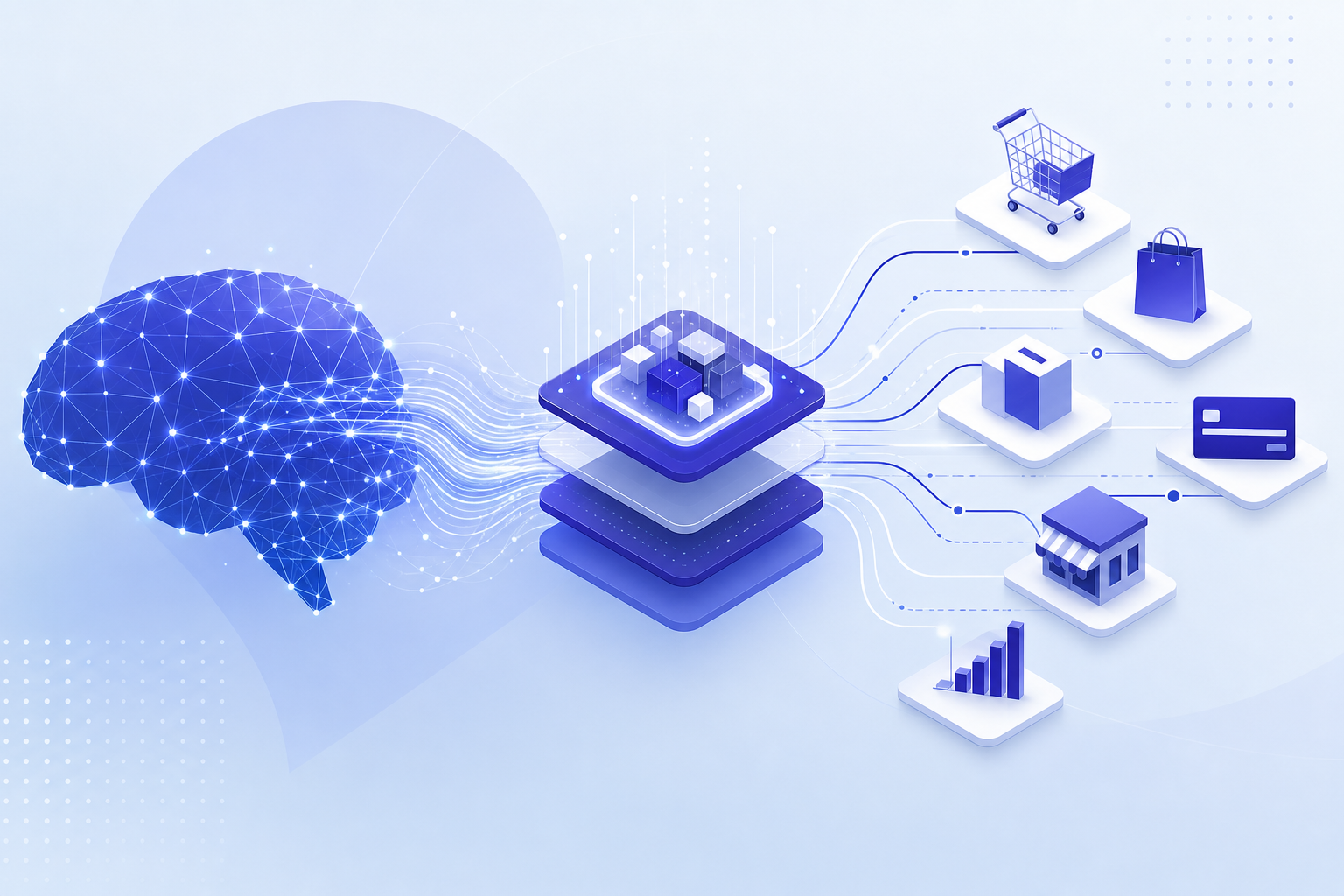
According to a press release distributed through EIN News, visualAI has launched discoverGPT, which the company describes as an MCP-native AI discovery platform for commerce. In plain terms, it is a product designed to help online stores get found by AI assistants, not just by human shoppers typing into Google.
The name is a mouthful, so let's unpack it piece by piece. 'Discovery' in commerce means the moment a shopper finds a product they were not specifically searching for by name. 'AI discovery' means that moment now happens inside a chat with an AI assistant. And 'MCP-native' means the platform is built from the ground up on the Model Context Protocol, an open standard that lets AI models connect directly to external tools and data sources.
One honest caveat before we go further: this is a company press release, not independent reporting. Details like pricing, customer results, and rollout timing come from visualAI itself, and some of them were not spelled out in the announcement. This post focuses on explaining the concepts behind the headline, which matter regardless of how this specific product performs.
🔌 What Does MCP-Native Actually Mean?
MCP stands for Model Context Protocol. Anthropic open-sourced it in November 2024, and it has since been adopted across the industry, including by OpenAI and Google. The easiest analogy is USB-C: instead of every AI app needing a custom, one-off connection to every database, store, or service, MCP gives everyone one standard plug.
When a product calls itself 'MCP-native,' it means AI assistants like Claude (currently on models such as Claude Sonnet 4.6) or ChatGPT can connect to it directly and pull live, structured information through that standard plug. For commerce, that means an AI assistant could query a store's actual catalog, with current prices and availability, instead of relying on whatever the model memorized during training or scraped from a web page.
That distinction is the whole story here. A web page is built for human eyes. An MCP server is built for AI agents. As more shopping conversations move into chat interfaces, the businesses whose product data is available in agent-readable form have an edge over businesses that only have a nice-looking website.
Why 'native' is the key word
Plenty of tools bolt AI features onto existing software. 'MCP-native' signals the opposite design choice: the platform assumes AI agents are the primary visitors. Whether visualAI executes this well remains to be seen, but the design bet itself reflects where the industry is clearly heading in 2026.
💡 Why This Matters for Solopreneurs and Small Sellers
If you sell anything online, the way customers find you is shifting under your feet. For twenty years, the playbook was SEO: write pages that rank on Google, and shoppers click through to your site. But a growing share of product research now happens inside AI assistants. Someone asks Claude or ChatGPT 'what's a good ergonomic desk chair under $300' and acts on the answer without ever seeing a search results page.
This is why launches like discoverGPT are worth your attention even if you never buy this particular product. They signal that a new distribution channel is forming, often called agentic commerce, where AI agents research, compare, and eventually purchase on behalf of users. Major players are already building for it: Shopify, Stripe, and others have shipped agent-facing commerce tooling, and Google and OpenAI have both pushed standards for agent-driven checkout.
For a solopreneur, the practical takeaway is not 'panic and rebuild everything.' It is that product data quality is becoming as important as page design. An AI agent cannot be charmed by your hero image. It reads your titles, descriptions, specs, prices, and reviews as structured data. Sellers who treat that data carelessly will be invisible in AI-mediated shopping, no matter how good their traditional SEO is.
⚖️ AI Discovery vs Traditional Search: What Changes
The clearest way to understand the shift discoverGPT is chasing is to put the old model and the new model side by side. Neither replaces the other overnight. Google still drives enormous traffic in 2026, and it will for years. But the two channels reward different things, and the table below shows where they diverge.
Notice the pattern in the right column: everything points toward structured, machine-readable, verifiable data. That is the common thread across MCP, AI SEO, and agentic commerce, and it is the thread you can act on today regardless of which platforms win.
| Traditional Search (SEO) | AI Discovery (MCP Era) | |
|---|---|---|
| Who reads your content | Human shoppers scanning pages | AI agents parsing structured data |
| How you get found | Ranking on a results page | Being retrievable and citable by an assistant |
| What wins | Keywords, backlinks, page experience | Clean product data, live availability, trust signals |
| The customer's path | Search, click, browse, buy | Ask, get an answer, approve, done |
| Your control point | Your website | Your data feed and agent-facing endpoints |
✅ How to Act on This Today: 5 Practical Steps
You do not need to be a developer, and you do not need to sign up for discoverGPT specifically, to get ahead of this shift. The announcement did not include public self-serve pricing at the time of writing, so treat visualAI's own site as the source of truth for availability. Meanwhile, here are five things any seller or knowledge worker can do this week.
The first two steps cost nothing but attention. The last three are where the real preparation happens, and they pay off across every AI discovery channel, not just this one platform.
- ✔Run the mystery shopper test: ask Claude or ChatGPT to recommend products in your category and see if your store appears, and what the AI says about you
- ✔Read the original announcement on EIN News and visualAI's website to check current pricing and availability before forming an opinion
- ✔Audit your product data: accurate titles, complete specs, honest descriptions, current prices, and visible reviews on every listing
- ✔Add or fix structured data (schema.org Product markup) on your store, since most platforms like Shopify handle much of this automatically
- ✔Bookmark the topic: follow 'agentic commerce' and 'MCP' news monthly, since this space is moving fast in 2026
🤔 What We Don't Know Yet (Healthy Skepticism)
A press release is a company telling its own story, so keep three open questions in mind. First, adoption: an MCP-native discovery platform is only valuable if AI assistants and their users actually route shopping queries through it. That depends on integrations we cannot verify from the announcement alone.
Second, differentiation: visualAI is not alone here. Shopify exposes catalogs to AI agents, Perplexity has shopping features, and both OpenAI and Google are building agent-driven checkout standards. Any new discovery platform competes with giants who already sit inside the chat window.
Third, economics: the announcement did not make pricing and business model details clear, and this post will not guess at numbers that were not published. None of this means discoverGPT will fail. It means the smart move for a small business is to prepare your data for every AI channel rather than betting early on any single one.
❓ Frequently Asked Questions
What is MCP (Model Context Protocol) in simple terms?
MCP is an open standard, released by Anthropic in November 2024, that lets AI models connect to outside tools and data through one common interface. Think of it as USB-C for AI: one standard plug instead of a custom cable for every connection. It has since been adopted broadly across the industry, including by OpenAI and Google.
Is discoverGPT related to ChatGPT or OpenAI?
No. Despite the 'GPT' in the name, discoverGPT is a product from visualAI, a separate company. 'GPT' has become shorthand for AI-powered products in general. The platform is built on MCP, an open protocol that works with multiple AI assistants rather than any single one.
How is AI discovery different from regular SEO?
Traditional SEO optimizes pages so humans find them on a search results page and click through. AI discovery optimizes your product data so AI assistants can retrieve, understand, and recommend it inside a conversation, often without the shopper visiting your site at all. SEO rewards keywords and backlinks; AI discovery rewards clean, structured, verifiable product data.
Do I need to be a developer to prepare my store for AI discovery?
No. The highest-impact work is non-technical: accurate product titles, complete specifications, honest descriptions, current prices, and visible reviews. If you sell on a platform like Shopify, much of the technical layer, including structured data and agent-facing APIs, is increasingly handled for you.
🏁 Final Thoughts
Here is the short version: visualAI launched discoverGPT, a platform built on the Model Context Protocol that aims to make stores discoverable by AI assistants instead of just search engines. The product itself is unproven, and key details like pricing were not public at the time of writing. But the trend it represents, agentic commerce, is very real in 2026. Your action item is simple and free: ask an AI assistant to recommend products in your category today, and see whether you exist in that answer. If this explainer helped you decode the headline, subscribe to Agents at Work for a plain-English breakdown of AI news every week, and drop a comment with the next headline you want explained.
Last updated: July 21, 2026 · Keyword: discoverGPT MCP-native AI discovery platform · Agents at Work


Comments
Post a Comment