White House Gates Early Access to Claude and GPT in 2026
The White House now has a say in who gets early access to Claude and GPT, according to a new report. Confused about what this means for your AI tools? Here is the plain-English breakdown and what to do today.
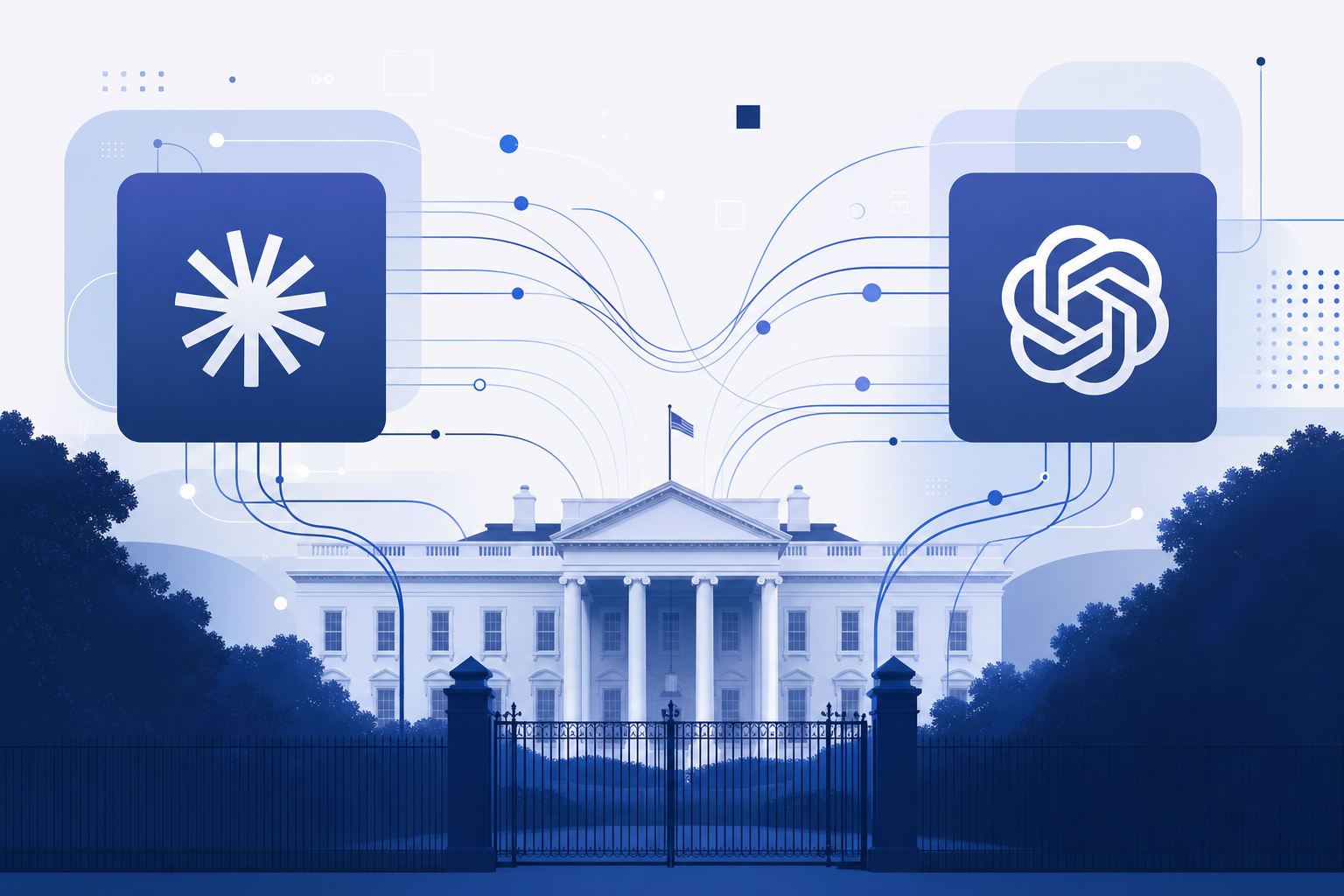
🏛️ What Happened: Washington Now Sits Inside the AI Release Pipeline
According to a report from Startup Fortune, the White House now plays a role in deciding who gets early access to frontier AI models such as Anthropic's Claude and OpenAI's GPT. In plain terms: before the newest, most capable versions of these models reach the public, the federal government is reportedly involved in determining which organizations get to test them first.
This did not come out of nowhere. Since August 2024, OpenAI and Anthropic have had formal agreements with the US government that give federal safety researchers access to major new models before public release for pre-deployment testing. What the new report describes is a step beyond testing: government influence over the early-access list itself.
One honest caveat: the full mechanics of this arrangement are still emerging, and secondary reports sometimes compress nuance into a dramatic headline. Treat the details as reported rather than settled, and check primary sources like whitehouse.gov, the Anthropic newsroom, and the OpenAI blog for official language.
📜 How We Got Here: From Voluntary Safety Deals to Federal Involvement
The relationship between frontier AI labs and the US government has been tightening for years, and this headline is best understood as the latest step on that path rather than a sudden takeover.
Two earlier milestones set the stage. First came the voluntary pre-deployment testing agreements in 2024. Then, in July 2025, the White House released its AI Action Plan, which made accelerating American AI leadership an explicit federal priority and deepened ties between Washington and the major labs, including large government contracts and infrastructure support.
When the government becomes a lab's biggest customer, infrastructure partner, and safety tester all at once, influence over release decisions is a natural next step. That is the context behind this story.
The 2024 pre-deployment testing agreements
In August 2024, OpenAI and Anthropic signed memoranda with the US AI Safety Institute, housed under the Department of Commerce, granting government researchers access to major new models before and after public release. The stated goal was safety evaluation, not distribution control.
The 2025 AI Action Plan shift
The administration's 2025 AI Action Plan reframed frontier AI as a national strategic asset, similar to aerospace or semiconductors. Once a technology is treated as strategic, governments historically want visibility into who touches it first. The reported early-access role fits that pattern.
💼 Why This Matters If You Run Your Business on AI
If you are a solopreneur or knowledge worker, your first question is probably: does this change the tools I use every day? For the models already on the market, no. Claude Sonnet 4.6, GPT-4o, Gemini 2.0 and their public successors remain available through the same apps and subscriptions as before.
What changes is the pipeline upstream of you. Early access has always existed: labs quietly give trusted developers, red-teamers, and enterprise partners a head start on new models. If the government now shapes that list, the head start may flow first toward defense contractors, federal agencies, and government-cleared enterprises rather than indie developers and startups.
That matters for competitive dynamics. Small builders have historically punched above their weight by adopting new model capabilities in the first weeks after release. A politically managed early-access queue could widen the gap between well-connected large players and everyone else, which is exactly why startup-focused outlets are covering this story.
| Question | Before | As reported in 2026 |
|---|---|---|
| Who decides early access? | The AI labs (Anthropic, OpenAI) | The labs, with White House involvement |
| Who typically got it first? | Trusted developers, red-teamers, enterprise partners | Government-cleared organizations move up the queue |
| Does it affect public releases? | No, public launch timing was a lab decision | Public availability continues, upstream queue changes |
| Impact on your current subscription | None | None so far |
✅ What This Does NOT Mean (Clearing Up the Headline)
Dramatic headlines invite dramatic misreadings, so let's mark the boundaries clearly.
This is not a ban, and it is not government approval of every AI release. Nothing in the reporting suggests that ChatGPT or Claude subscriptions now require any kind of clearance. You can open either app today and work exactly as you did last week.
It is also not censorship of model outputs. The story concerns who gets pre-release access to frontier models, not what those models are allowed to say. And it does not cover the open-weight world: models you can download and run yourself, like Meta's Llama family, follow a different distribution path entirely.
Finally, this is a US policy story. If you live outside the United States, your access to the public versions of these tools is governed by each company's regional availability, not by this arrangement.
🚀 How to Act on This Today: 5 Practical Steps
You cannot vote yourself onto an early-access list, but you can position your business so that upstream politics never breaks your workflow. The theme is simple: reduce single-vendor dependence and stay close to primary sources.
Start by auditing where your critical workflows depend on one specific model. If your entire client deliverable process runs through a single provider, a delayed release or changed access tier hits you harder than it should. Keeping a tested fallback, for example running your core prompts on both Claude and a GPT or Gemini model, turns a headline like this into a non-event.
Second, get your news from the source. Policy stories mutate fast as they pass through aggregators. Ten minutes of primary-source reading beats an hour of secondhand hot takes.
- ✔List every business workflow that depends on a single AI provider
- ✔Test your 3 most important prompts on a second model (Claude, GPT, or Gemini) as a fallback
- ✔Bookmark primary sources: whitehouse.gov, anthropic.com/news, openai.com/blog
- ✔Avoid building client commitments on unreleased or invite-only model features
- ✔Subscribe to your AI providers' changelogs so release news reaches you directly
🔭 What to Watch Next
Three signals will tell you whether this becomes a lasting structural change or a footnote.
First, watch whether other labs enter similar arrangements. If Google's Gemini models or other frontier systems end up under comparable early-access frameworks, this becomes the industry norm rather than a two-company deal.
Second, watch whether the arrangement stays limited to pre-release testing windows or creeps into API access tiers and enterprise availability. The former barely touches regular users; the latter would reshape who builds with cutting-edge AI first.
Third, watch the international response. The EU and UK run their own AI safety evaluation bodies, and a US-controlled early-access queue could push other governments toward similar demands, fragmenting how new models roll out worldwide.
❓ Frequently Asked Questions
Can I still use Claude and ChatGPT normally after this White House change?
Yes. This story concerns early, pre-release access to new frontier models, not the public products. Your existing apps, subscriptions, and API access to released models like Claude Sonnet 4.6 and GPT-4o continue to work exactly as before.
Does the White House now approve every AI model release?
No. Based on the reporting, the government's role concerns who gets access to models before public release, building on pre-deployment safety testing agreements that OpenAI and Anthropic signed with the US government in 2024. Public release decisions still rest with the companies.
Why would AI companies agree to government involvement in early access?
The federal government has become one of the industry's most important partners: a major customer through government contracts, a supporter of data-center and energy infrastructure, and the official safety tester of new models. Cooperation on early access is a natural extension of that relationship, and it buys regulatory goodwill.
Does this affect AI users outside the United States?
Not directly. Public versions of Claude, ChatGPT, and Gemini remain governed by each company's regional availability. The thing to watch is whether early-access controls evolve into broader export-style restrictions, which could eventually affect international enterprise customers.
🏁 Final Thoughts
The short version: the White House is now reportedly involved in deciding who tests frontier models like Claude and GPT before the public sees them. Your everyday tools are untouched, but the upstream pipeline that decides who builds with cutting-edge AI first is becoming political, and that trend is worth tracking if AI powers your income. Protect yourself the boring way: keep a second model tested and ready, read primary sources, and never build client work on access you do not control. If you want plain-English breakdowns of AI news like this every week, subscribe to Agents at Work, and drop a comment with the AI policy question you want explained next.
Last updated: July 18, 2026 · Keyword: White House early access Claude GPT · Agents at Work


Comments
Post a Comment