Anthropies: Free Tool Removes Claude AI Watermarks (2026)
Anthropic now watermarks Claude's AI output, and Cardano founder Charles Hoskinson just released Anthropies, a free tool that removes it. Here is what happened and what it means for you.
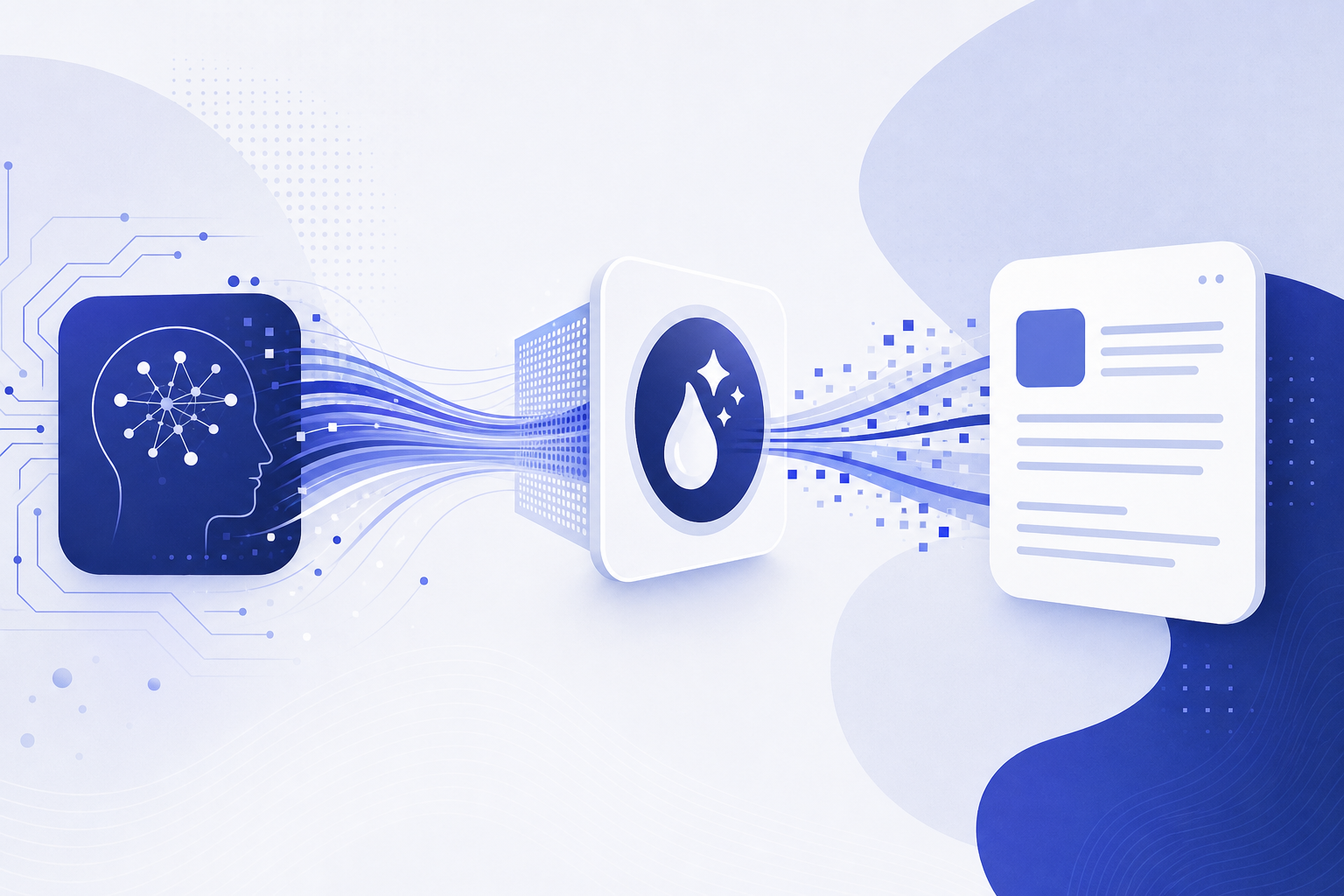
📰 What Happened: Hoskinson Ships a Watermark Remover in Days
On Sunday, August 16, 2026, Charles Hoskinson, the founder of the Cardano blockchain, published a free tool called Anthropies on GitHub under an Apache 2.0 license. The tool has one job: it removes the invisible watermarks that Anthropic now embeds in content generated by its Claude AI models.
The timing matters. Anthropic activated watermarking across its Claude products just five days earlier, on August 11, 2026. The company made the move to comply with the European Union's AI Act transparency requirements, which took effect on August 2, 2026 and require AI companies to mark AI-generated content.
So within a single week, one of the biggest AI labs turned on watermarking, and a high-profile tech founder shipped a public tool to undo it. That speed is the story. It signals that the fight over AI content labeling will be a cat-and-mouse game, not a settled policy.
🔍 What Exactly Is Anthropic Watermarking?
When people hear the word watermark, they picture a logo stamped on an image. Claude's text watermark works differently. According to reporting on the tool, Anthropic's watermark operates at the model level through a technique called tournament sampling. When several words would fit a sentence equally well, the model's word choice itself carries a statistical pattern that Anthropic can later detect.
The Anthropies README puts it bluntly: "The mark is the wording. There is no separate payload to delete. Removing it means changing which words are there." In other words, you cannot strip the watermark the way you delete a metadata tag. The signal is woven into the sentence structure itself.
The watermark story actually spans three separate layers, and Anthropies targets all of them. The table below breaks down each layer and how the tool handles it.
One Notable Gap: Code
Code carries only a minimal watermark signature. Programming syntax leaves far fewer word-choice options than prose, so there are fewer places to hide a statistical pattern. If you mainly use Claude for coding, the watermark question affects you less than it affects writers.
| Watermark Layer | What Anthropic Embeds | How Anthropies Removes It |
|---|---|---|
| Prose text | Statistical word-choice pattern via tournament sampling | Rewrites text through a non-Claude, non-Gemini model |
| Images and files | C2PA content credentials (provenance metadata) | Re-encodes the file to drop the metadata |
| Git commits | Co-Authored-By attribution trailers | Strips the trailer text deterministically |
💼 Why This Matters If You Use AI for Work
If you are a solopreneur or knowledge worker who drafts newsletters, proposals, or blog posts with Claude, this news affects you directly. As of August 2026, text you generate with current Claude models carries a detectable signature. Anyone with Anthropic's detection capability could, in principle, identify your published content as Claude-generated. That changes the privacy calculation for people who quietly use AI in client work.
There is a second-order effect too. Watermarking is not just an Anthropic story. The EU AI Act's transparency rules apply to AI providers broadly, so other major labs face the same pressure. Whatever model you rely on, whether that is a Claude model like Sonnet 4.6, or GPT-4o, or Gemini 2.0, the question of whether your outputs are silently labeled is now a real one to ask.
Finally, this episode reveals how fragile text watermarking may be as a policy tool. If a weekend project can route text through a different model and break the pattern, regulators and AI companies will need to decide whether watermarking can ever be robust, or whether disclosure has to happen some other way. That debate will shape the tools you use every day.
⚙️ How the Anthropies Tool Actually Works
Anthropies is a command-line tool, which means you run it in a terminal rather than clicking through an app. That makes it more accessible to technical users, though the README walks through the basics.
The tool ships with three operational modes. Clean mode handles the deterministic layers: it strips Git attribution trailers and re-encodes images to remove C2PA credentials. Humanize mode tackles the hard part, prose. Because the watermark lives in word choice, Anthropies routes your text through a separate rewriting model to change the wording. Notably, it avoids using Claude or Gemini for the rewrite, since passing text back through Claude would simply reinstate the mark.
The third mode, orchestrate, includes a safeguard that blocks processing if the host model running the pipeline is itself Claude. It is a small detail, but it shows the author thought through how watermarks could sneak back in during processing.
One caveat worth knowing: rewriting text through another model changes your words. If your draft has a voice you care about, expect to re-edit after humanize mode runs. This is not a lossless operation, and the README itself acknowledges that removing the mark means changing the wording.
Anthropies at a glance: 1. Get it: GitHub, search "Anthropies" by Charles Hoskinson (Apache 2.0, free) 2. Clean mode: strips Git trailers + C2PA image metadata 3. Humanize mode: rewrites prose through a non-Claude model 4. Orchestrate mode: full pipeline, refuses to run on Claude as host 5. Remember: rewritten text needs a human re-read before publishing
⚖️ Should You Actually Use It? Read This First
Before you rush to strip watermarks, slow down and think about why the watermark exists. The EU AI Act's transparency rules aim to help readers know when content is machine-generated. The legal obligations in the Act fall primarily on AI providers like Anthropic, but the legal and ethical position of end users who deliberately remove those marks is far less settled. Nothing in this article is legal advice, and if your business operates in the EU, it is worth checking how the transparency rules apply to your situation.
There are also professional considerations. If a client contract requires you to disclose AI use, removing a watermark does not remove that obligation. And platforms or publishers may set their own rules about AI-generated content regardless of what any regulator says.
That said, there are understandable reasons people care about this. Some users see silent output labeling as a privacy issue, since it lets a third party identify what tool you used. Others simply want to know what their AI tools embed in their work. Even if you never run Anthropies, knowing that Claude output is watermarked in 2026 is worth ten minutes of your attention.
✅ What You Can Do Today: 5 Practical Steps
You do not need to be a developer to act on this news. Here is a short action list you can work through today, whether you want to try the tool or just protect your workflow.
Start by auditing where AI-generated content enters your business. Then decide, deliberately, what your disclosure policy is. Most solopreneurs have never written one down, and this news is a good prompt to do it. If you do want to experiment with Anthropies, treat it like any brand-new open-source project: it launched days ago with only a handful of GitHub stars, so read the code or the README before running it on anything sensitive.
- ✔List every place Claude or other AI output ends up in your published work
- ✔Check whether your client contracts or platforms require AI disclosure
- ✔Write a one-paragraph personal policy on when you disclose AI use
- ✔If curious, find the Anthropies repo on GitHub and read the README before running anything
- ✔Test humanize mode on a throwaway draft first, never on client work directly
- ✔Follow coverage of the EU AI Act transparency rules, since more labs will add watermarks
🔮 The Bigger Picture: Watermarks vs. Removers
This launch is one move in a longer game. Anthropic watermarked Claude output to meet a regulatory deadline. Hoskinson answered within five days with a removal tool. The next moves are predictable: watermarks that survive rewriting, detectors that flag rewritten text, and regulators deciding whether removal tools deserve their own rules.
For everyday AI users, the takeaway is simpler. The era of invisible, unlabeled AI text is ending, at least at the big labs. Whether labels survive contact with tools like Anthropies is now an open experiment playing out in public. Watch what OpenAI and Google do next, because the EU deadline that pushed Anthropic applies pressure across the industry.
Agents at Work will keep tracking this story as detection tools, lab responses, and regulator reactions land.
❓ Frequently Asked Questions
Does Claude really watermark its text now?
Yes. Anthropic activated watermarking across Claude products on August 11, 2026 to comply with EU AI Act transparency requirements that took effect August 2, 2026. The watermark is statistical: it lives in the model's word choices rather than in hidden metadata, so it cannot be deleted like a file tag.
Is it legal to remove an AI watermark?
It is not a settled question. The EU AI Act places marking obligations on AI providers, but the position of end users who remove marks is murkier and may depend on where you operate and what your contracts say. Removing a watermark also does not remove any disclosure duty you have to clients or platforms. When in doubt, ask a lawyer familiar with the AI Act.
What is Anthropies and is it free?
Anthropies is a free, open-source command-line tool released by Cardano founder Charles Hoskinson on August 16, 2026 under an Apache 2.0 license on GitHub. It strips Git attribution trailers, removes C2PA metadata from images by re-encoding them, and rewrites prose through a non-Claude model to break the statistical text watermark.
Does the watermark affect code generated by Claude?
Barely. Programming syntax allows far fewer interchangeable word choices than prose, so code carries only a minimal watermark signature. If you mainly use Claude models for coding, the text watermark is much less relevant to your output.
Will ChatGPT and Gemini output be watermarked too?
The EU AI Act transparency rules that pushed Anthropic apply to AI providers broadly, so other major labs face the same regulatory pressure. Specific implementations and timelines vary by company, so check each provider's current documentation rather than assuming all outputs are marked the same way.
🏁 Final Thoughts
Here is the story in three sentences. Anthropic began watermarking Claude output on August 11, 2026 to meet EU AI Act transparency rules, and five days later Cardano founder Charles Hoskinson released Anthropies, a free GitHub tool that removes those marks by stripping metadata and rewriting prose through other models. Whether you ever run the tool or not, you should now assume that major AI models label their output, write down your own AI disclosure policy, and watch how OpenAI and Google respond to the same regulation. If explainers like this help you keep up with AI news without reading ten articles, subscribe to Agents at Work, and drop a comment: would you remove an AI watermark from your own content, or leave it in?
Last updated: August 17, 2026 · Keyword: remove Claude AI watermark · Agents at Work


Comments
Post a Comment