Quantide Brings AI Pricing Officer to Claude via MCP (2026)
Quantide Growth Partners just plugged its AI Digital Pricing Officer into Claude through native MCP. Confused by the headline? Here is what it means for you, explained in plain English.
📰 What Happened: The Announcement in Plain English
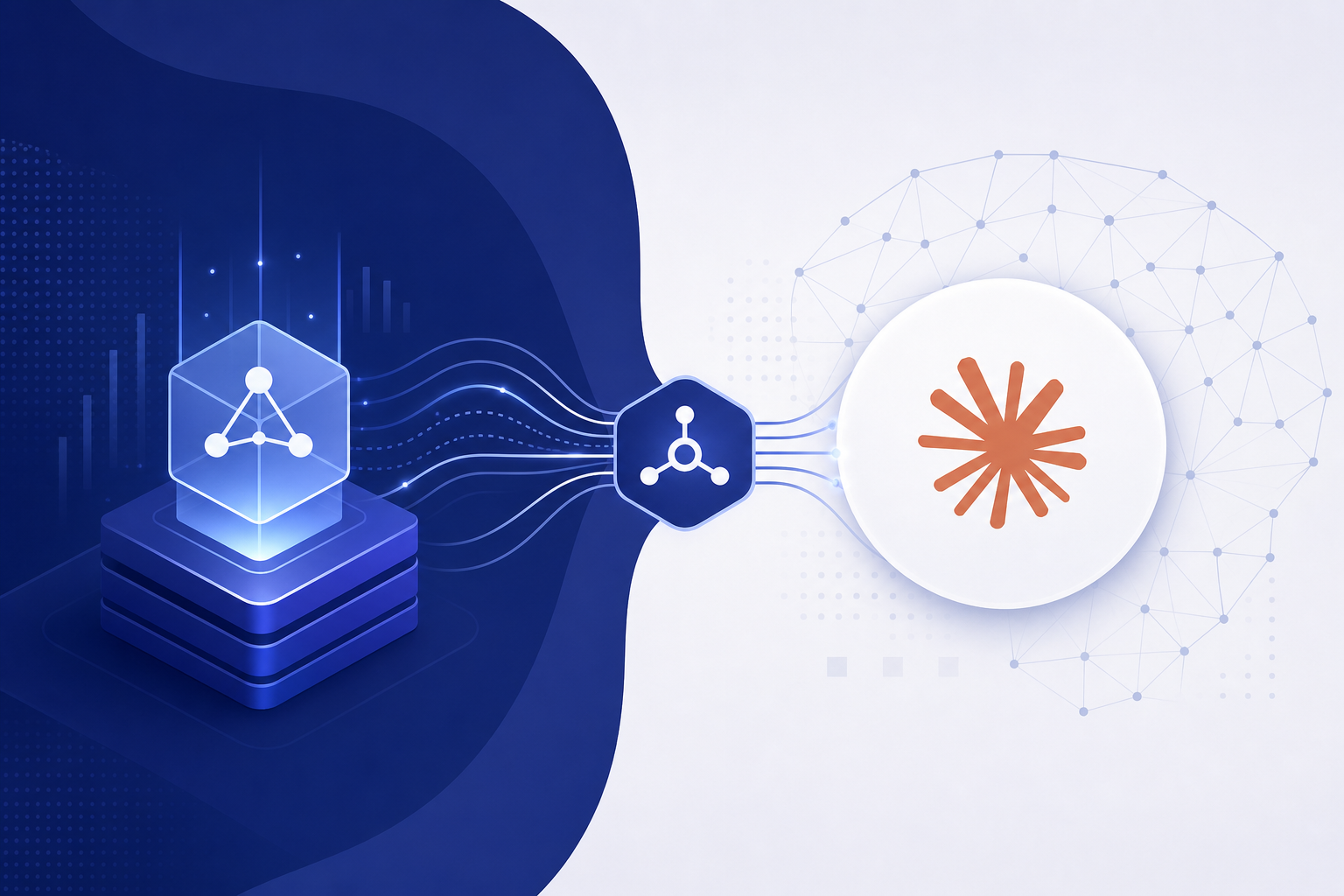
On August 4, 2026, Quantide Growth Partners announced through Business Wire that its Digital Pricing Officer (DPO) is now available inside Anthropic's Claude via a native Model Context Protocol (MCP) integration.
Translation: DPO is a specialized AI agent focused entirely on pricing strategy. Until now, you accessed it through Quantide's own product, which launched in beta back in January 2026. With this release, the same pricing brain connects directly into Claude, so you can ask pricing questions and generate pricing deliverables without leaving the chat window you already use.
The integration works across every surface where Claude operates: the claude.ai web and mobile apps, Claude Desktop, Claude Code, Projects, and the Anthropic API. Under the hood, DPO draws on Quantide's Knowledge Vault, a collection of tens of thousands of curated pricing documents and ten specialized RAG databases, including the pricing frameworks library Quantide acquired from Value Innorruption Advisors in December 2025.
🤖 What Is an AI Digital Pricing Officer Anyway?
Think of it as a fractional Chief Pricing Officer that lives in software. Large enterprises hire pricing consultants or full-time pricing teams to decide what to charge, how to package tiers, and how to respond when a competitor cuts prices. Small companies almost never can afford that, so they guess.
DPO packages that expertise as an AI agent. Instead of generic advice from a general-purpose chatbot, it answers using Quantide's proprietary methodologies, such as the Quantide Packaging Framework, the Agent Pricing Layer Cake for AI product monetization, and Total Economic Value analysis.
The launch also introduces a Skills Library: 12 pre-built modules across four categories (Pricing Strategy, Packaging and Governance, Sales and Deal Desk, and Competitive and Market Intelligence). These go beyond Q&A. A Skill can produce implementation-ready artifacts directly inside Claude, such as pricing calculators, dashboards, playbooks, presentations, and business documents.
Why 'in Claude' is different from 'a chatbot with pricing tips'
Claude on its own can talk about pricing, but it works from general training knowledge. The MCP connection lets Claude pull answers from Quantide's curated databases in real time, which is the difference between asking a smart friend and asking a specialist with a research library behind them.
🔌 Why MCP Is the Real Story Here
MCP, the Model Context Protocol, is an open standard that Anthropic introduced in late 2024. It acts like a universal port that lets AI assistants connect to outside tools and knowledge bases. If you have heard the phrase 'USB-C for AI,' this is what people mean.
This announcement is one example of a much bigger 2026 trend: companies are no longer just building standalone AI apps. They are shipping their expertise as connectors that plug into the assistants people already use, like Claude (currently powered by models such as Claude Sonnet 4.6 and Claude Opus 4.8) or other MCP-compatible clients.
For you as a user, the practical difference is workflow. Without MCP, you would research pricing in one tool, copy findings into a doc, and rebuild everything by hand. With a native MCP connector, the specialist knowledge, your conversation, and the final deliverable all live in one place.
| Generic chatbot advice | DPO via native MCP in Claude | |
|---|---|---|
| Knowledge source | General training data | Curated Knowledge Vault with ten specialized RAG databases |
| Output | Text suggestions you rebuild yourself | Ready-to-use artifacts: calculators, playbooks, decks |
| Methodology | Varies by prompt | Named frameworks like Total Economic Value |
| Where it works | One app | claude.ai, Desktop, Claude Code, Projects, API |
💡 Why It Matters for Solopreneurs and Small Teams
Pricing is the highest-leverage decision most solo founders never revisit. Raise prices 10 percent with no churn and that improvement flows almost entirely to profit. Yet most small businesses set a price once, copy a competitor, and move on. Enterprise-grade pricing strategy has simply been out of reach at their budget.
Quantide positioned its January 2026 beta launch explicitly as 'democratizing enterprise-level pricing expertise,' and the Claude integration extends that logic. If you already pay for Claude, specialist pricing help now sits one connector away, inside the assistant you use daily.
There is a second, broader lesson. If you sell any kind of expertise, this announcement shows the emerging playbook: package your knowledge and methods so AI assistants can use them, rather than hoping clients visit your website. Consultants, coaches, and agencies should study this move even if they never touch pricing strategy.
One honest caveat: an AI pricing agent gives you frameworks and analysis, not certainty. You still need to test prices with real customers, and you should treat any AI recommendation as a well-informed starting point rather than a final answer.
🚀 How to Try It or Act on It Today
If the idea of AI-assisted pricing appeals to you, here is a practical path you can start today. Note that Quantide has not published consumer pricing for the Claude integration in the announcement itself, so check their site for current terms before committing.
Even before connecting anything, you can act on the underlying idea right now. Open Claude and ask it to walk you through a value-based pricing exercise for your product. Then compare that generic output with what a specialized connector promises. That contrast will tell you whether the specialist layer is worth it for your business.
- ✔Visit the Business Wire release (August 4, 2026) or Quantide's website to confirm current availability and pricing
- ✔Make sure you have a Claude plan that supports connectors (custom connectors are managed in Claude's Settings under Connectors)
- ✔Add the Quantide DPO connector, then start a chat and ask a real question, for example: 'Audit my three-tier SaaS pricing at $19, $49, and $99'
- ✔Ask for an artifact, not just advice: a pricing calculator, a competitor comparison, or a packaging playbook
- ✔Sanity-check every recommendation against your own customer data before changing prices
🔭 What to Watch Next
Expect more of these announcements, not fewer. Anthropic has been steadily expanding its connector directory, and vertical specialists in legal, finance, marketing, and HR are all racing to become 'the agent' for their domain inside Claude and other MCP-compatible assistants.
For Quantide specifically, watch whether the Skills Library grows beyond the initial 12 modules and whether the company publishes public pricing for solo users versus growth-stage companies, which the release names as the core audience.
For the ecosystem, the interesting question is quality control. When anyone can ship an MCP connector, users will need ways to judge which specialist agents are genuinely backed by deep knowledge bases and which are thin wrappers. Announcements like this one, with named methodologies and a documented acquisition behind the knowledge base, at least give you something concrete to evaluate.
❓ Frequently Asked Questions
What is MCP in Claude?
MCP stands for Model Context Protocol, an open standard Anthropic introduced in late 2024. It lets Claude connect to external tools, databases, and services through connectors, so the assistant can pull in specialist knowledge or perform actions instead of relying only on its training data. You manage connectors in Claude's settings.
What does Quantide's Digital Pricing Officer actually do?
It is a specialized AI pricing agent built on Quantide's Knowledge Vault, which contains tens of thousands of curated pricing documents and ten specialized RAG databases. Inside Claude, it answers pricing strategy questions and runs 12 pre-built Skills that generate deliverables like pricing calculators, dashboards, playbooks, and presentations.
Do I need a paid Claude plan to use it?
The announcement says DPO works across claude.ai web and mobile, Claude Desktop, Claude Code, Projects, and the Anthropic API. Connector availability generally depends on your Claude plan, and Quantide's own access terms were not detailed in the release, so check both Anthropic's plan pages and Quantide's website for current requirements.
Is an AI pricing agent better than hiring a pricing consultant?
They solve different problems. A consultant gives you bespoke judgment and accountability but costs enterprise money. An AI agent like DPO gives you structured frameworks, research-backed answers, and instant artifacts at software prices. For most solopreneurs, the realistic comparison is not agent versus consultant, it is agent versus guessing.
🏁 Final Thoughts
The short version: as of August 4, 2026, Quantide's Digital Pricing Officer works natively inside Claude through MCP, bringing enterprise pricing frameworks, a curated knowledge base, and 12 artifact-generating Skills into the assistant many of us already use daily. For solopreneurs, it is both a useful tool and a signal of where AI is heading, with specialist agents plugging into general assistants instead of living in separate apps. If pricing has been a set-and-forget decision in your business, this is a good excuse to revisit it this week. Want more plain-English AI news like this? Subscribe to Agents at Work, and tell us in the comments: would you trust an AI agent to help set your prices?
Last updated: August 06, 2026 · Keyword: Digital Pricing Officer Claude MCP · Agents at Work


Comments
Post a Comment